Skip to content Skip to footer

Bathroom Tile Installation in San Jose, CA: 2026 Guide

Professional bathroom tile installation San Jose homeowners budget for runs $10 to $50+ per square foot installed depending on tile material, pattern complexity, and whether waterproofing is included — and in the Bay Area’s competitive housing market, tile quality is what buyers see and judge first. Construction Remodeling in Bay Area (CA Lic. #1095283) provides full bathroom tile installation and shower tile install services throughout San Jose and the South Bay.

By Ray Evgeny Khaikin, Owner, Construction Remodeling in Bay Area · Last updated 19, June 2026

Tile is the most visible finish in any bathroom — it defines the design, influences the perceived size, and determines how the space reads in listing photos. The difference between a professionally tiled bathroom and a rushed tile job shows immediately and permanently. This guide covers what bathroom tile installation costs in San Jose, how to choose between ceramic and porcelain, what makes a shower floor different from a wall, and how to navigate tile selection for both small and large Bay Area bathrooms.

For our broader San Jose bathroom guides, see our small bathroom remodel guide and our walk-in shower installation guide.

How much does bathroom tile installation cost?

How much does bathroom tile installation cost? in the San Jose and South Bay market in 2026, per Angi’s bathroom tile cost data:

Application

Installed cost per sq ft

Ceramic floor or wall tile

$12 – $35

Porcelain floor or wall tile

$15 – $50

Shower tile surround (wall)

$18 – $45

Shower floor (mosaic or textured)

$20 – $55

Large-format porcelain (24×24 or larger)

$25 – $65+

Natural stone (marble, travertine)

$30 – $80+

For a full San Jose bathroom tile project — floor, shower surround, and tub deck — total installed cost typically runs $4,500 to $12,000 for mid-range porcelain. Shower tile install alone (walls + floor in a standard 36×48 shower) runs $2,700–$5,500 including waterproofing membrane.

Bay Area labor runs 15–25% above national averages for tile installation. Budget accordingly when comparing national cost guides, which use figures that don’t reflect South Bay contractor rates.

Bathroom tile installation cost per square foot — what drives it

The bathroom tile installation cost per square foot in San Jose is driven by five factors:

Tile material. Ceramic is the lower-cost baseline; porcelain costs more in both material and labor (harder to cut, heavier to handle); natural stone is the premium tier in both categories.

Pattern complexity. A straight-set pattern (tile rows aligned in a grid) is the fastest and cheapest installation. Diagonal (45°) patterns require more cuts at perimeter edges, adding 10–15% labor time. Herringbone and custom mosaic patterns can add 20–40% to labor cost.

Grout joint width and type. Narrow-joint (1/16″ to 1/8″) large-format installations require more precise leveling and alignment than standard-joint work. Rectified tiles (machine-cut to precise dimensions) allow narrow joints; natural stone and unrectified tile require wider joints.

Wall height. Standard shower surround cost assumes tile to ceiling height. Tiling to 8 feet adds cost vs. a half-height tile job; full-height tile on all walls is the premium option.

Prep and demolition. Old tile removal adds $2–$7 per sq ft. Subfloor or cement board replacement (needed if the substrate is damaged or missing) adds $5–$15 per sq ft. Waterproofing membrane installation in the shower adds $450–$750 for a standard shower enclosure.

Ceramic vs porcelain bathroom tile

The ceramic vs porcelain bathroom tile decision is the most common specification question in San Jose bathroom projects. Here’s the honest comparison for Bay Area applications:

Ceramic tile: Clay-based, fired at lower temperatures than porcelain, slightly more porous, easier to cut. Better choice for wall tile applications where direct water contact is limited. Available in an enormous color and pattern range at lower material cost. Not the right choice for shower floors or heavily wet surfaces where sustained water exposure is likely.

Porcelain tile: Fired at higher temperatures, denser, less porous (water absorption under 0.5% per ANSI standards), harder, and harder to cut. The right choice for bathroom floors, shower floors, and any surface that will see sustained water exposure. Also more durable under foot traffic and heavy use. Per the Tile Council of North America (TCNA), porcelain’s low water absorption makes it appropriate for wet area floor applications where ceramic may not be.

The practical rule for San Jose bathrooms:

  • Shower floors: porcelain or glazed ceramic with a textured surface — COF (coefficient of friction) at 0.42 wet minimum per ANSI standards
  • Shower walls: either ceramic or porcelain — wall tile sees splash but not sustained submersion, so ceramic is appropriate
  • Bathroom floors: porcelain preferred for longevity and moisture resistance
  • Vanity backsplash and decorative accents: ceramic is fine; lower cost, more design options
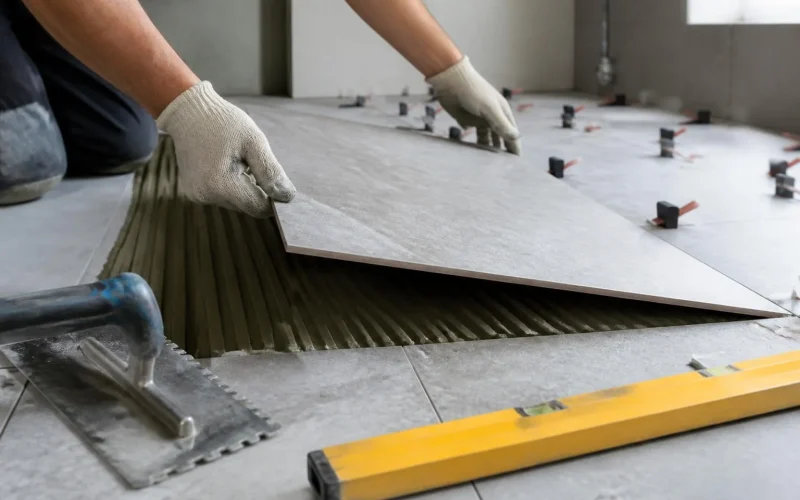
puscas-adryan-sAjlPnz0QL4-unsplash

What is the best tile for bathrooms?

What is the best tile for bathrooms? in the San Jose market in 2026 depends on application:

Shower floors: Matte porcelain mosaic (2×2 or hexagon) is the professional standard — small format allows the slope toward the drain, matte texture provides wet-surface grip, and porcelain’s density handles sustained water exposure. Anti-slip rated tiles with COF ≥ 0.42 wet are required by California Building Code.

Shower walls: Large-format porcelain (12×24 or 24×48) is the current design standard. Large format minimizes grout lines, which reduces maintenance and creates a cleaner visual. Rectified large-format porcelain set with 1/16″ joints looks like a slab.

Bathroom floors: Matte or honed porcelain in a neutral tone — white, gray, taupe, or greige — is the most durable and most buyer-universally-appealing choice in San Jose’s competitive market.

Bathroom walls (non-wet): Subway tile (3×6 white or off-white) is the perennial San Jose choice for the same reasons it’s been popular for a century — it reads as clean, it photographs well, and it doesn’t date.

Best bathroom tile trends 2026

For best bathroom tile trends 2026 in the South Bay market:

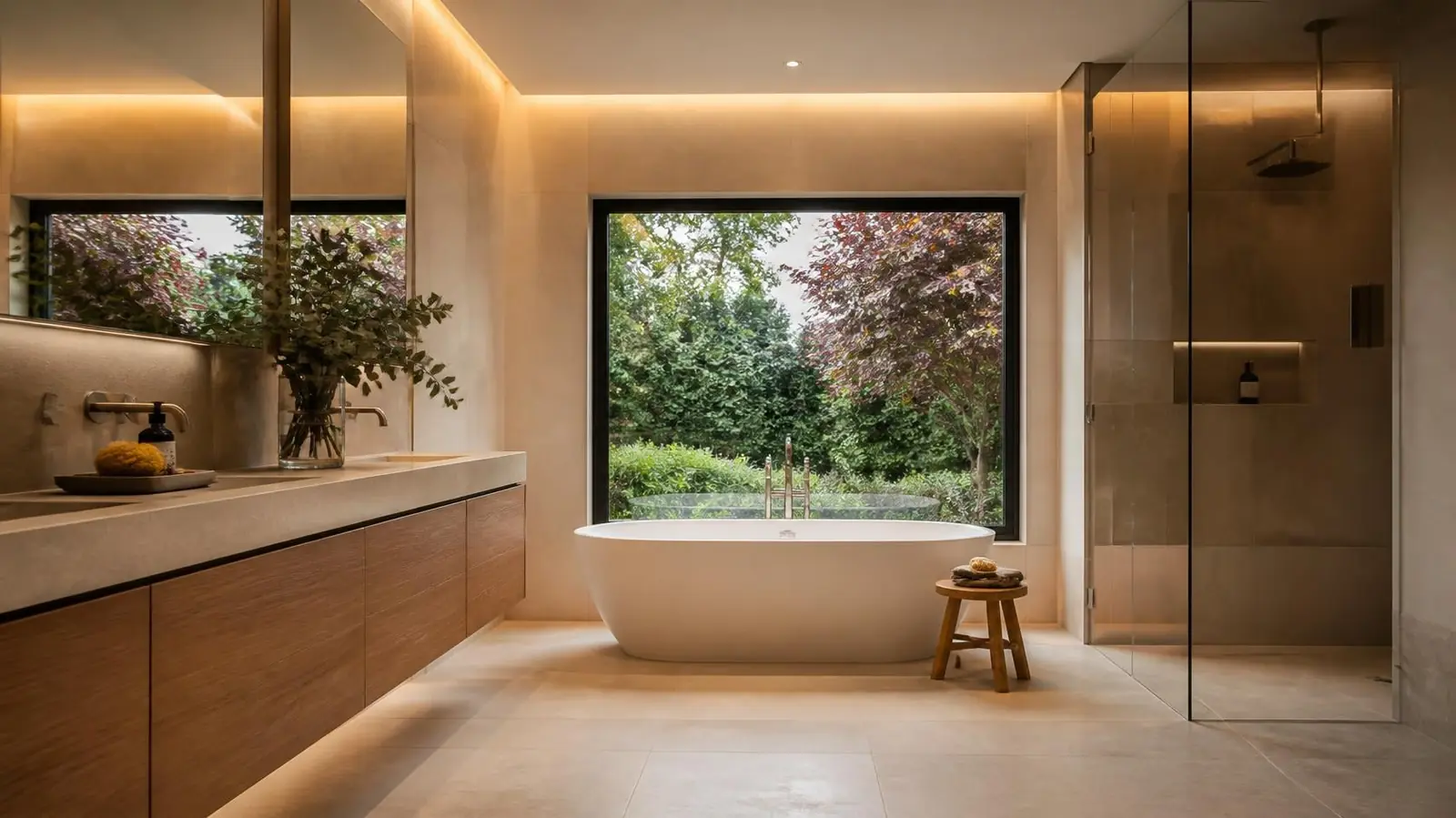
Warm earth tones are replacing cool grays. The gray tile dominance of 2015–2023 is transitioning to warm whites, creams, terracotta accents, and taupe-range neutrals. San Jose buyers and design-savvy homeowners are moving toward warmer palettes that photograph well in the Bay Area’s natural light.

Large-format continues to grow. 24×24 and 24×48 porcelain slabs — once a commercial specification — are now standard in premium San Jose bathroom remodels. The visual effect of near-seamless walls and floors is the current standard for spa-quality bathrooms.

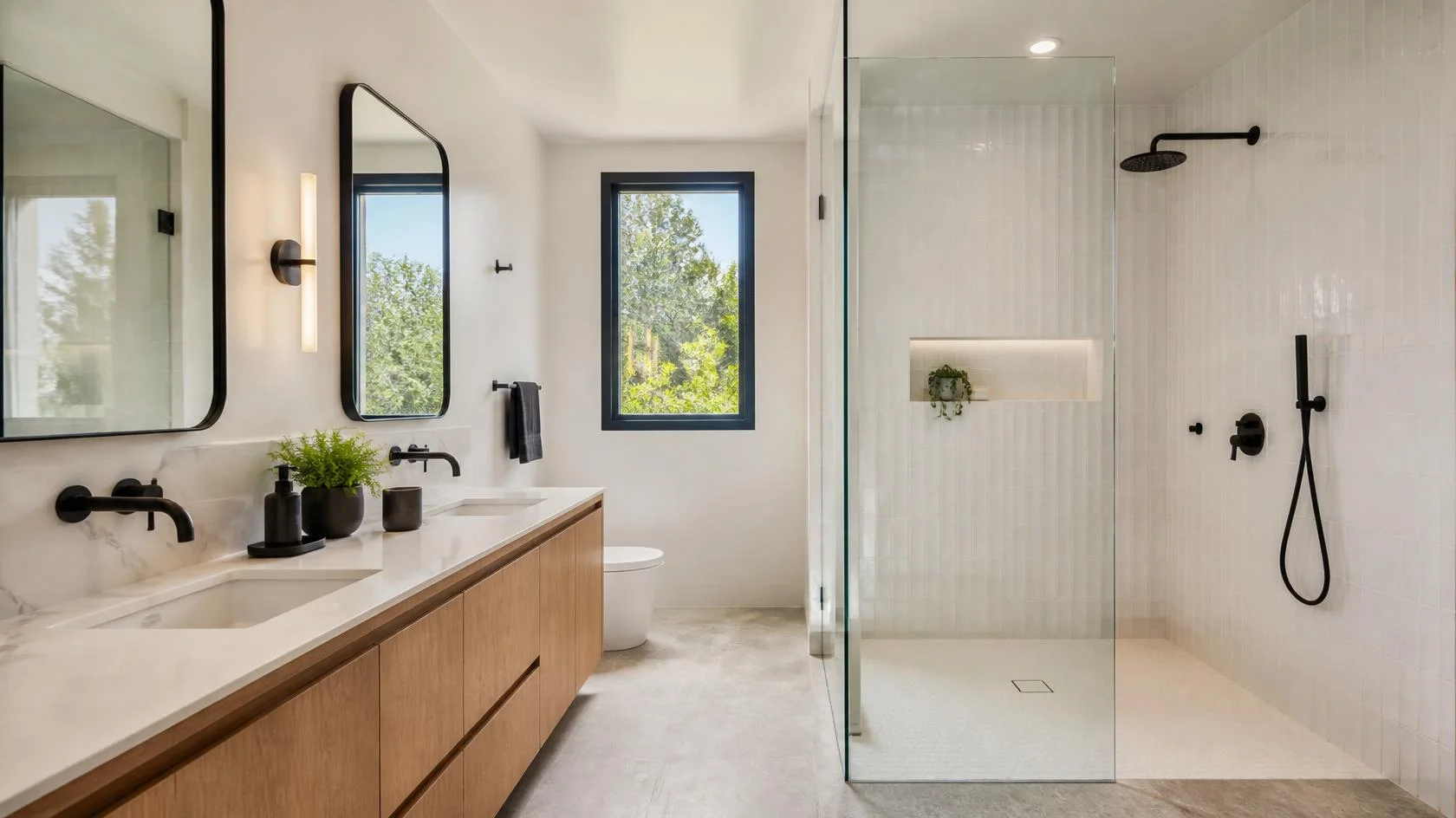
Fluted and textural tile on accent walls. Vertically ribbed (fluted) tile used as an accent on one wall behind the vanity or in the shower niche creates visual depth without pattern. It’s the 2026 replacement for the 2020s subway-tile-with-dark-grout look.

Matte finishes over gloss. Matte porcelain for floors (required for COF compliance anyway) and matte or satin walls. High-gloss tile is fading from primary bathroom applications in the Bay Area market.

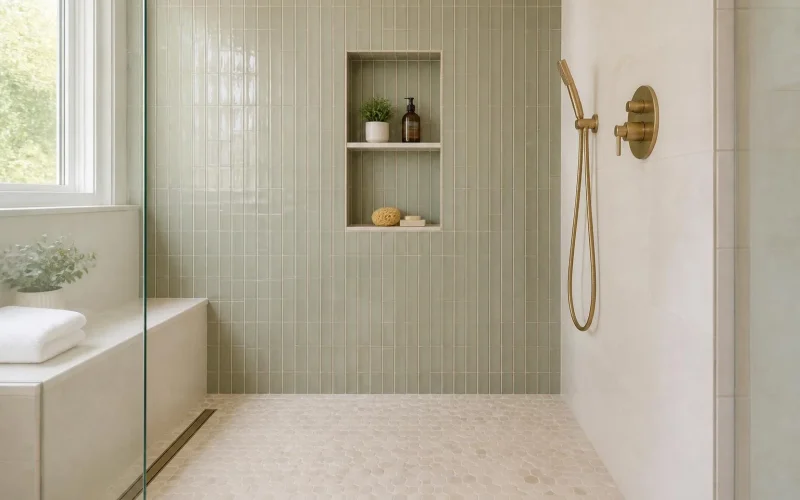
magnific_beautiful-spa-style-bathr_YVyeZuQWeC

How to choose tile for a small bathroom

For how to choose tile for a small bathroom in San Jose’s older housing stock — where primary baths in 1970s–1990s homes can be as small as 45–60 sq ft — the design principles that make the most of a constrained space:

Use large-format floor tile. Counter-intuitively, 12×12 or 12×24 floor tile reads larger in a small bathroom than 4×4 mosaic. More tile means more grout lines, which visually subdivide the floor. Per NKBA planning guidelines, keeping grout lines minimal in small spaces extends the visual plane.

Match floor and wall tile tone. Using the same tone family on floor and walls (not necessarily the same tile, but the same color temperature) eliminates the visual band at the floor-wall transition that makes a small bathroom feel shorter.

Extend tile to the ceiling. Full-height tile on at least one wall (the shower wall or the primary visible wall) draws the eye up and makes the room feel taller without adding square footage.

Avoid busy patterns on floors in small bathrooms. Herringbone, chevron, and small-unit mosaic patterns work well in large bathrooms where they can breathe. In a 50 sq ft bathroom, they visually overwhelm the space.

How long does it take to tile a bathroom?

How long does it take to tile a bathroom? in San Jose, a realistic production timeline for a mid-range bathroom tile project:

  • Demo and substrate prep: 1–2 days (old tile removal, cement board or Schluter system installation, subfloor inspection)
  • Waterproofing membrane: 1 day, plus 24-hour cure before tile
  • Floor tile setting: 1–2 days; cure 24 hours before grout
  • Shower wall tile setting: 2–3 days for a full surround; cure before grout
  • Grouting: 1 day; cure 72 hours before use
  • Caulking, sealing, fixtures: 1 day

Total on-site time: 7–12 working days for a full bathroom tile project (floor + shower walls + tub surround). A shower tile install only runs 5–7 working days. For bathroom floor tile setting only, the typical timeline is 3–4 days.

The full tile project timeline from first contact to finished bathroom is 4–8 weeks — accounting for tile selection, ordering (allow 1–2 weeks delivery for Bay Area suppliers), scheduling, and the sequencing above.

Frequently Asked Questions

How much does bathroom tile installation cost in San Jose?

In 2026, bathroom tile installation in San Jose runs $12 to $35 per sq ft for ceramic, $15 to $50 for porcelain, and $30 to $80 or more for natural stone. A full bathroom tile project covering floor, shower surround, and tub deck typically runs $4,500 to $12,000 for mid-range porcelain. Shower tile install alone runs $2,700 to $5,500 including waterproofing. Bay Area labor runs 15 to 25 percent above national averages.

What is the best tile for a shower floor?

Matte porcelain mosaic (2×2 or hexagon) is the professional standard for shower floors — small format follows the slope to the drain, matte texture provides wet-surface grip, and porcelain’s density handles sustained water exposure. California Building Code requires a minimum wet coefficient of friction of 0.42 for shower floor tile. Anti-slip rated matte porcelain meets or exceeds this threshold; polished surfaces do not.

How long does a bathroom tile job take?

A full bathroom tile project in San Jose takes 7 to 12 working days of on-site work: 1 to 2 days for demo and substrate prep, 1 day for waterproofing, 2 to 3 days for floor tile setting, 2 to 3 days for shower wall tile, 1 day for grouting, and 1 day for caulking and sealing. Shower tile only takes 5 to 7 working days. Total from first contact to finished bathroom including tile selection, ordering, and scheduling typically runs 4 to 8 weeks.

Should the bathroom floor and wall tile match?

They don’t need to match exactly, but they should be in the same tone family. Using the same color temperature (warm or cool) for both floor and wall tile eliminates the visual band at the transition that makes a small bathroom feel shorter. Mixing tile types is effective — a large-format porcelain floor and a subway tile wall are a classic combination — as long as the tones read as coordinated rather than competing.

Can I install bathroom tile over existing tile?

Sometimes, but with conditions. The existing tile must be firmly adhered (no loose tiles), the surface must be level and flat, and the added height from a tile-on-tile installation (typically 3/8 to 1/2 inch) must be accommodated by door clearances and transition strips. The resulting installation is heavier than a fresh substrate — not recommended over plywood subfloors or on walls without confirmed structural support. For showers, tile-over-tile is generally not recommended: waterproofing should be installed over fresh substrate to ensure a watertight result.

Contact Us

Construction Remodeling in Bay Area 111 Jackson St, Hayward, CA 94544 Phone: (510) 990-9243 CA License #1095283 | Full-Service Design-Build Remodeling | Bay Area

Serving San Jose, Hayward, Fremont, Santa Clara, Sunnyvale, and the greater South Bay.

Request a free tile installation estimate or call (510) 990-9243.

Leave a comment