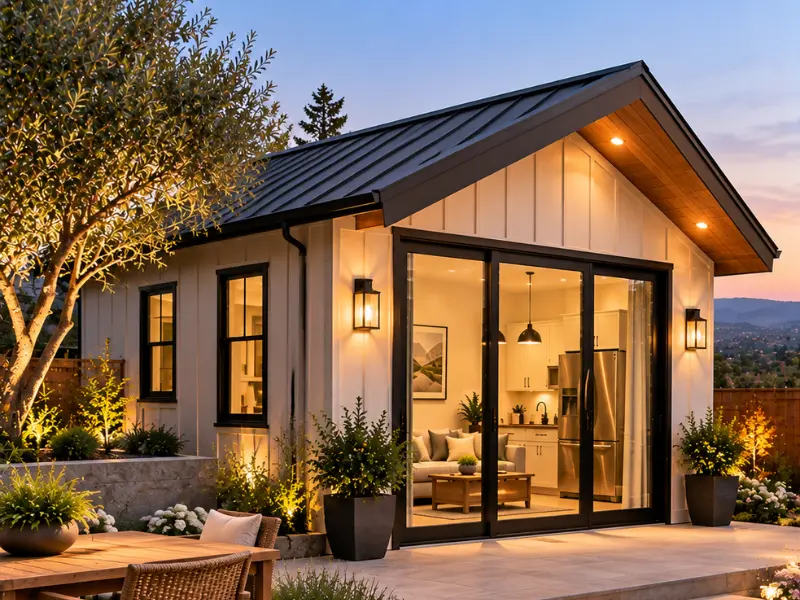
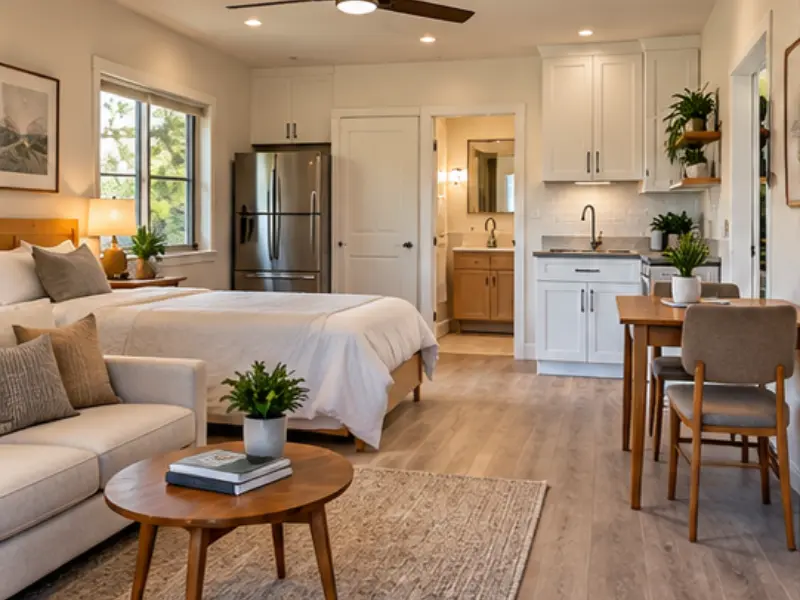
A licensed general contractor that handles the whole job builds accessory dwelling units in Castro Valley: the lot check, the plans, the County approval, the utilities and the construction. Construction Remodeling in Bay Area (CRBA) does that design-to-completion work from its Hayward office, so one team answers for the unit from the first site visit to the final inspection.
Castro Valley isn’t a city, and that changes the paperwork more than most owners expect. Here’s what an ADU involves here, why the size rules seem to shift depending on who you ask, what an ADU does for value and rent, and how to pick a builder.
By Ray Evgeny Khaikin, Owner & General Contractor · Last updated 9 October 2026
Four things, in order: a lot check, a design, an approval and a build. Skip the first and you can pay for plans the lot can’t support. People ask what’s involved in building an ADU here, and the honest answer is that the building itself is only part of it. A lot of the effort goes into things you’ll never see in the finished unit.
Stage | What happens | What can slow it |
Feasibility | We check setbacks, lot coverage, utilities, grade, drainage and fire access | A hillside, a sewer line far from the site, or an easement |
Design and plans | Floor plan, structural drawings and energy compliance | Changes to the layout after plans are drawn |
County approval | Plans go to Alameda County for review | Corrections requested during plan check |
Construction | Foundation, framing, utilities, finishes and inspections | Weather, and anything the ground reveals |
Final sign-off | The County inspects and approves the finished unit | Open items on the inspection list |
From first call to keys, we plan on about eight to fifteen months for a detached unit, and less for a conversion. Quotes vary more than on almost any other residential job, because much of the work is site work, utilities and permits instead of walls and finishes. That’s why we start with a free feasibility visit and give a written, itemized quote before plans are submitted. Our ADU services page lists the paths we build.
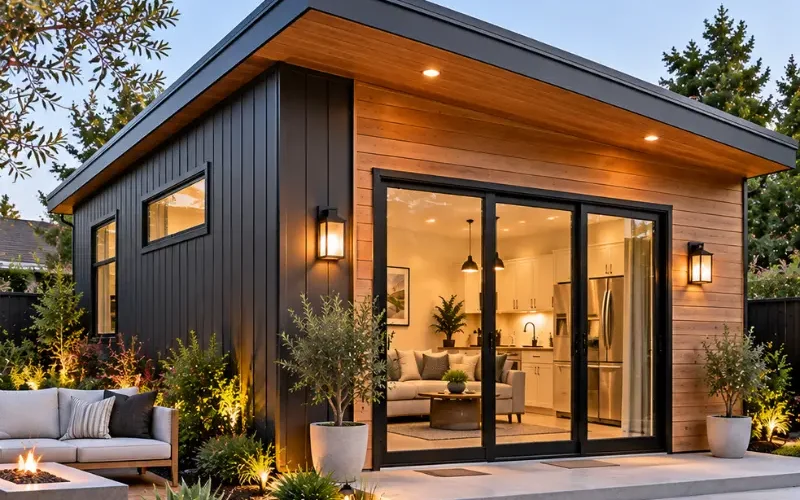
The right type depends on your lot, your goal and how much of the existing house you’re willing to use. These are the main options:
A detached accessory dwelling unit Castro Valley owners can build gives the most separation. An attached backyard cottage and in-law unit Castro Valley families ask about tends to suit a lot where a detached structure won’t fit the setbacks. And if you already have a garage, our garage conversion page explains that route. California’s ADU state law summary, published by the Association of Bay Area Governments, sets the baseline for all four.
Because two sets of rules are in play, and they don’t always match. State law sets the floor. Alameda County, which governs unincorporated Castro Valley, has its own ADU ordinance on top of it. When we say “ask the County,” this is why.
In April 2025, the state housing department wrote to the County after reviewing its 2024 ADU ordinance. The state’s findings letter listed dozens of places where it found the ordinance out of line with state law, including size limits for detached units, a cap tied to whether a junior unit exists, and parking rules. The same letter notes that state law treats a non-compliant local ordinance as void until it’s fixed. In practice, that means state standards can override a stricter local number.
We can’t tell you what the County’s rule will say on the day you apply, and we won’t pretend to. What we do is confirm the current rule at the feasibility visit, before any plans are drawn. The FAQ below gives the state numbers we design to.
Castro Valley mixes flat valley lots with hillside properties, and the ground often decides the plan. Hillside lots can need extra foundation design, retaining walls and drainage. Fire access can limit where a unit sits. And the distance to the sewer and water connections can matter more than the size of the unit itself, because trenching is real work and real money.
That’s also why a detached unit isn’t always the right answer. On a tight or steep lot, an attached unit or a conversion can reach the same goal with less site work. Our Castro Valley page explains how County permits work for remodels here.
Often, but it isn’t automatic. A permitted ADU counts as real living area to an appraiser and can bring in rent, which generally supports value. An unpermitted one can’t be legally rented or appraised and can become a problem at sale. Appraisers still compare your property with similar sales, so the effect depends on the market and the quality of the unit.
Income is easier to check. Fannie Mae’s selling guide lets lenders count rental income from an existing ADU when qualifying a borrower, limited to 30 percent of total qualifying income and to one ADU. That’s useful if you’re financing a purchase or refinance, and it shows the unit is treated as real housing. People also ask how much an ADU costs to build, and since cost sets the return, we’d put the quote next to local rents before you commit. It’s the only way to know whether the numbers work for your lot.
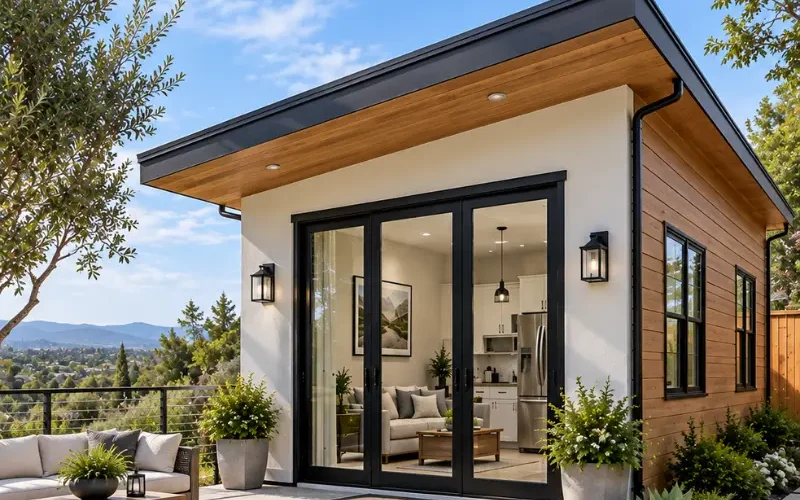
If you’re asking who builds accessory dwelling units in Castro Valley, or which builder near me handles ADU design and build, start with what the contractor will take responsibility for. An ADU is plans, structure, utilities, County review, inspections and the build. Ask for a CSLB license you can verify (CRBA’s is #1095283), a written, itemized quote that shows site work, utilities and permits, and a builder who handles plan check and inspections, so you aren’t running between offices. Then ask whether your lot supports the unit you want. Hearing “no” early beats paying for plans that can’t be built.
Be careful with prefab units that advertise a low headline price. That number often leaves out site work, foundations and utility connections. CRBA backs its work with a ten-year workmanship warranty, and we serve Castro Valley alongside Hayward and San Leandro.
It depends on the type of unit, its size, how far the sewer, water and electrical connections have to run, the condition of the ground, the level of finish, and the plans, permits and fees. A garage conversion usually costs less than a detached new build, and hillside or clay-soil lots add engineering. We don’t print a number here, because two lots on the same street can land very differently. After a free feasibility visit, you receive a written breakdown of every part of the job.
State law sets the floor. A detached ADU of at least 800 sq ft with side and rear setbacks of no more than four feet must be allowed, and a local cap can’t squeeze a studio or one-bedroom under 850 sq ft, or a larger unit under 1,000 sq ft. Detached units can be up to 16 feet tall in most cases, and a junior unit is limited to 500 sq ft. The County’s own caps may differ, so we confirm the current number for your lot before we design.
Castro Valley is governed by Alameda County instead of a city, so the County reviews and approves the plans. State law requires a decision on a complete ADU application within 60 days, with a completeness response in 30, and no public hearing if the project meets the standards. Hillside lots can add drainage or soils review. We draw the plans, file them, respond to the County’s review comments and book each inspection until the unit is approved.
Yes. Once it has permits and sign-off, the unit can be rented, and owner occupancy can’t be required for a standard ADU, though the County may require rentals of 30 days or longer, and a junior unit does require the owner to live on the property. What it earns depends on the unit and the local rental market, so the useful test is your written quote next to what similar units rent for nearby. An unpermitted unit can’t be legally rented.
Yes. We handle the feasibility visit, architectural plans, structural engineering, energy compliance, County submittal, utility connections, construction and each inspection until the County signs off, all under one licensed contractor. If you already have plans, we’ll build to them.
Construction Remodeling in Bay Area (CRBA)
Address: 111 Jackson St, Hayward, CA 94544
Phone: (510) 990-9243
Hours: Mon – Thu: 8am – 6pm | Fri – Sun: 9am – 4pm
License: #1095283
(CSLB B, General Building Contractor)
Serving Castro Valley and the East Bay, including Hayward, San Leandro, Fremont and Union City.