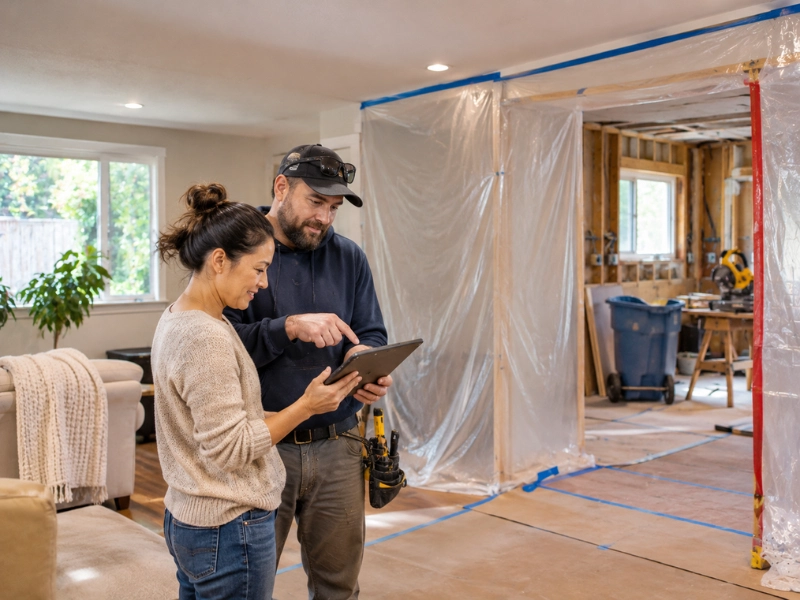

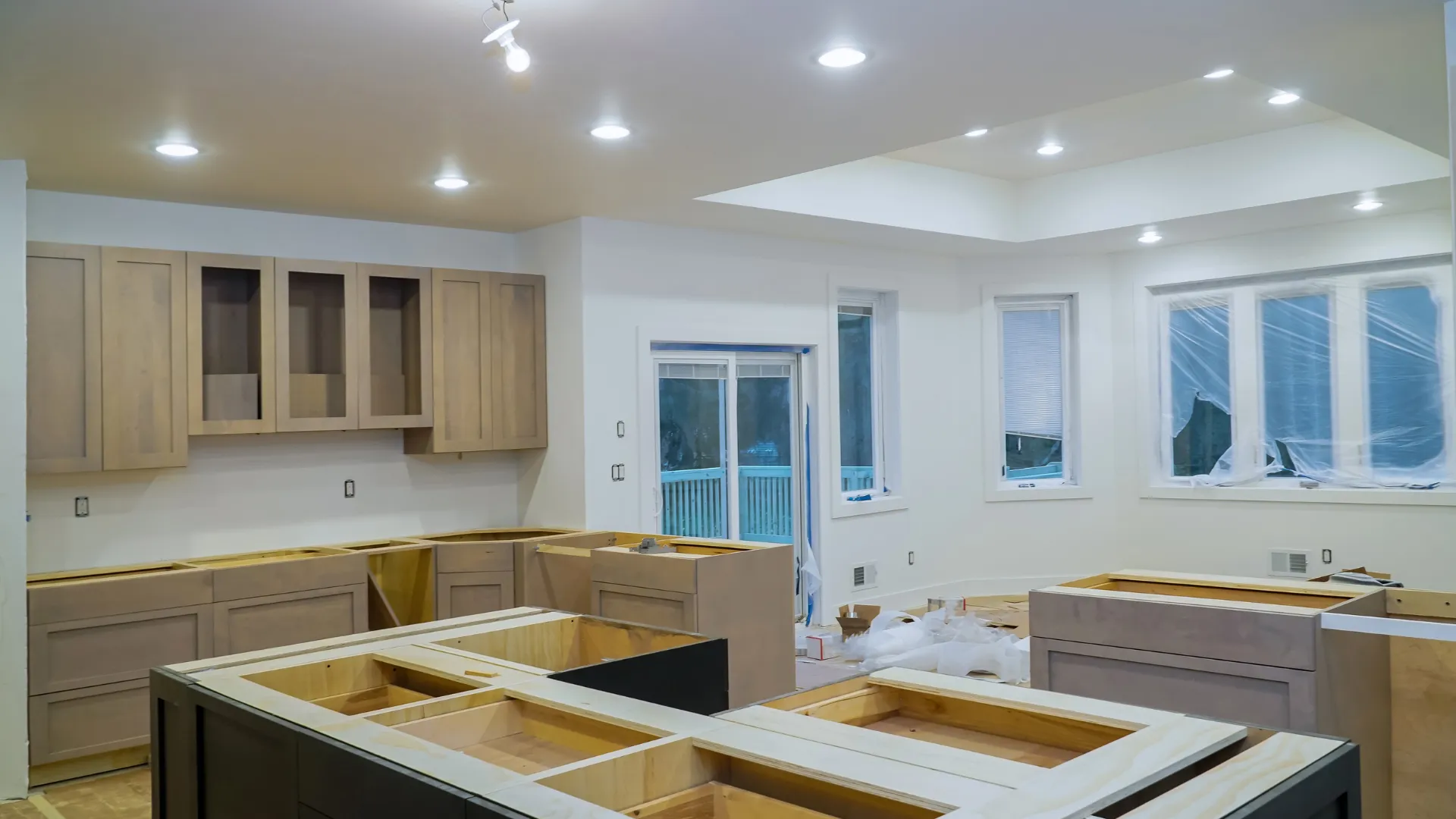
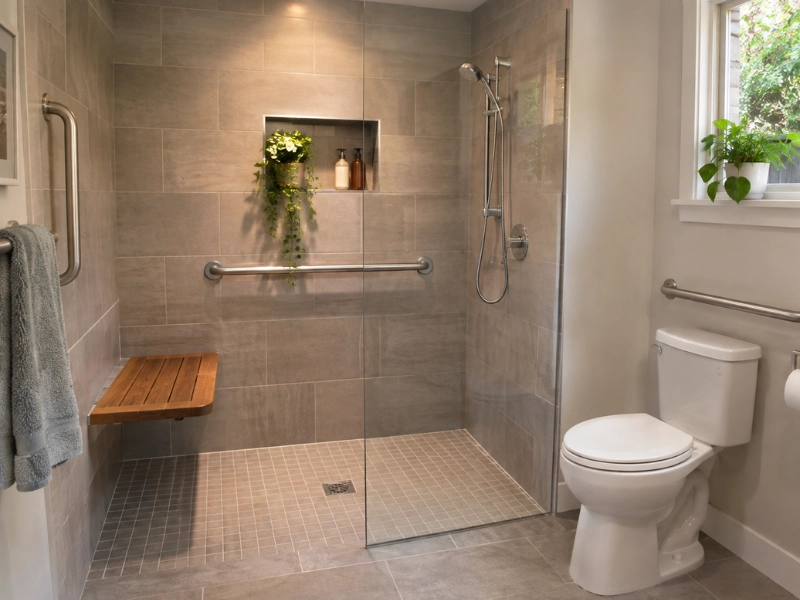

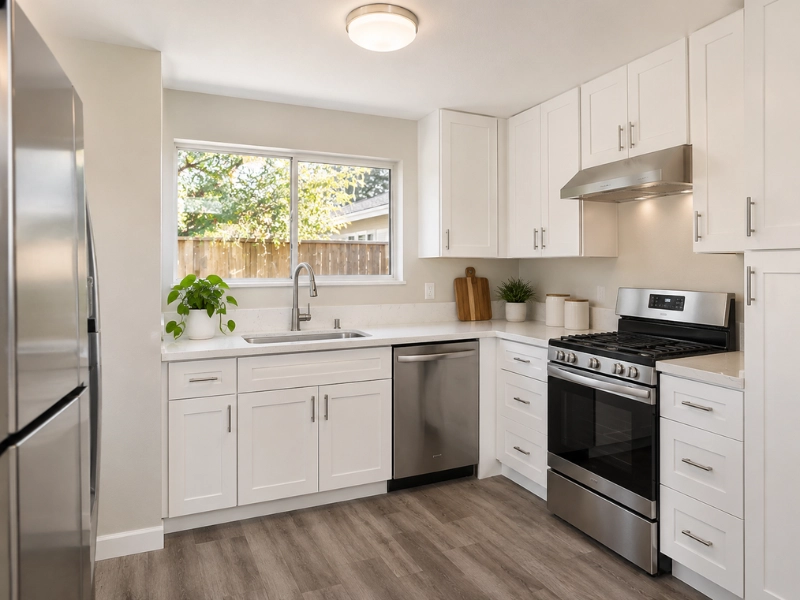

A home remodeling contractor plans around you by mapping the job before demolition. That means deciding which rooms stay off-limits, where tools are staged and when inspections will pause the work. It also means guessing what an older house hides behind its walls. At Construction Remodeling in Bay Area, we write that plan down for every Castro Valley and East Bay project, so you know what each week looks like.
By Ray Evgeny Khaikin, Owner & General Contractor · Last updated November 24, 2026
A good home remodeling contractor plans the route, the staging area and the schedule before anyone swings a hammer. Most of the stress in a remodel comes from surprises. So the first job is to remove as many of them as possible on paper.
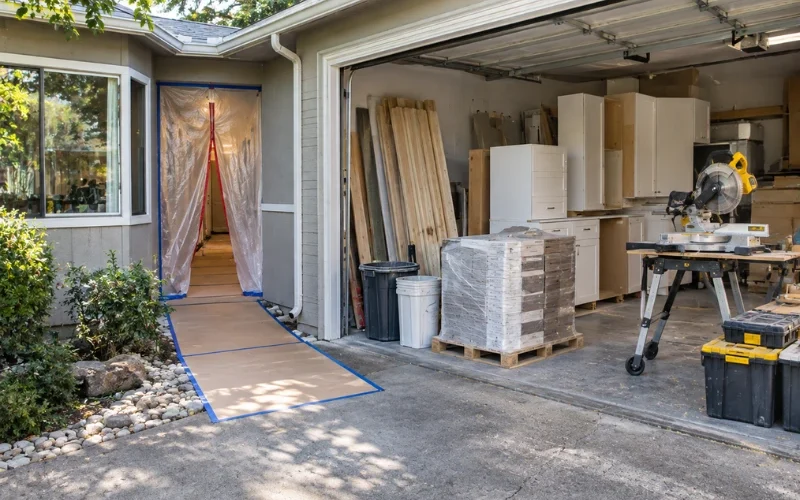
We start with a walk through the whole house, not just the room being remodeled. Along the way, we note how the crew will get in and out without crossing your living space. We also check where the electrical panel, water shutoff and attic access are, because trades will need them later.
Next, we pick a staging zone. That’s usually part of the garage, a side yard or the driveway. Lumber, cabinets and tile need a dry place to wait. Saws need somewhere to run that isn’t your living room.
Finally, everything goes into a written, itemized scope with allowances stated before the contract. You sign off on it before demolition. That way, the plan isn’t something you hear about. It’s something you can read and hold us to.
Older Castro Valley houses change the plan because what’s inside the walls is often original. Many homes around Castro Village and the flats date from the 1940s through the 1960s. As a result, opening a wall can turn up things a newer house simply doesn’t have.
Here’s what we most often plan for in homes of that age:
Lead is the one that most affects how the work is done. According to the EPA’s Renovation, Repair and Painting program, about three-quarters of U.S. homes built before 1978 still contain some lead-based paint. Paid work that disturbs those surfaces must be done by an EPA-certified firm using lead-safe practices. Our team includes an EPA Lead-Safe Certified Renovator, so we build those steps into the schedule from the start.
Because of this, we price rewiring or repiping as separate line items whenever we suspect them. You see the possible cost up front. Then, if the walls come out clean, that money stays in your pocket.
Permits and inspections shape the calendar because certain work can’t move forward until an inspector signs off. Castro Valley isn’t an incorporated city. Instead, Alameda County handles building permits for unincorporated areas, Castro Valley included.
In practice, that means a few days in every project are inspection days. On those days, walls stay open and the crew may be lighter. It’s normal, and it’s how you know the hidden work was checked. We handle the plan submittal, plan-check responses, inspection scheduling and closeout.
Here’s how a typical interior remodel moves, phase by phase:
Phase | What the crew is doing | What it means for your household |
Demolition | Removing cabinets, fixtures, drywall and flooring | The busiest stretch; the work zone is fully closed off |
Rough-in | Running new framing, wiring, plumbing and ducts | Trades come and go; panel or water access may be needed |
Rough inspections | County inspector checks the open work | Walls stay open; a quieter day or two |
Insulation and drywall | Closing walls, taping and texturing | The room starts to look like a room again |
Finishes | Cabinets, tile, counters, fixtures and paint | Deliveries pick up; staging area is at its fullest |
Final inspection and walkthrough | Inspector sign-off, then a punch list with you | You get the space back and a list of any touch-ups |
Every phase depends on the one before it. For example, cabinets can’t go in until the drywall is done. And drywall can’t start until the rough inspection passes. So if the crew isn’t on site one day, the reason is often a scheduled inspection or a material delivery.
You should pack up anything in or next to the work zone that could get scratched or shaken. Even careful work sends vibration through walls. On top of that, crews need clear space to move.
Here’s a short list worth handling a week before start:
Also, think about the path from the front door to the work area. If it runs through a hallway full of family photos, take them down. They’re easy to rehang and hard to replace.
It also helps to walk the house with your kids before demolition. Show them which doors stay shut and why. Children handle a remodel far better when the rules are clear from day one.
You keep track of progress through regular, written updates rather than standing in the doorway all day. Hovering slows the crew and raises your stress. Meanwhile, the information you actually need can come to you.
On our projects, you get access to a shared portal with daily progress photos. You can see what happened that day, even from work. In addition, we hold a weekly check-in to cover what’s done, what’s next and any decisions coming up. And the owner’s direct cell number is on every contract, so you’re never stuck waiting on a call center.
This matters most when something unexpected turns up. For instance, a rotted subfloor under an old dishwasher is common. With photos and a quick call, you can see the problem and approve the fix the same day. Without that, small issues sit for days and the schedule slips.
Planning a remodel your family will live through?
Call: (510) 990-9243
Email: constructionremodelinginbay@gmail.com
Get a free in-home estimate and a written, itemized quote
See our home remodeling service
We work across the Castro Valley, San Leandro and Hayward side of the East Bay, plus Union City and Fremont. Our office sits on Jackson Street in Hayward. So most of these neighborhoods are a short drive away. That helps when a part needs to arrive fast.
For anyone looking into home remodeling in Castro Valley CA, we work in Castro Village, Palomares Hills and Five Canyons. You can read more on our Castro Valley remodeling page. In San Leandro, we see many older homes in Estudillo Estates and Broadmoor. Our San Leandro remodeling page covers them.
If you’re comparing home remodeling contractors near Castro Valley and San Leandro CA, ask each one how they’d stage your house. The answer shows whether they’ve worked in homes like yours. Our Hayward remodeling page covers the projects closest to our office. And if a kitchen tops your list, see our kitchen remodeling service.
Yes, most families can stay through a kitchen, bath or phased remodel, and moving out only makes sense when a gut job cuts water or power for weeks. Anyone asking can you live in your house during a remodel should settle living in during the work, or staying in the house while an East Bay remodel is underway, in the contract.
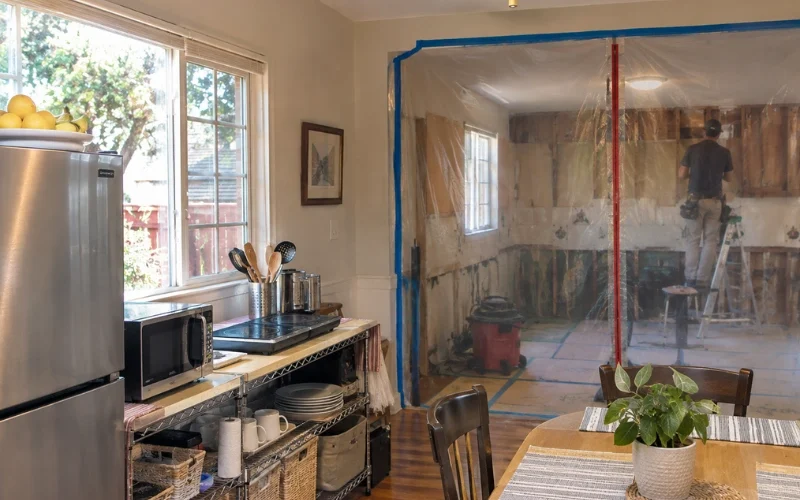
Most families cook in a temporary kitchen in the dining room or garage with the fridge, a microwave and an induction plate. For anyone wondering how do you cook during a kitchen remodel, one-pot meals and paper plates make six weeks far easier.
Dust is kept out with sealed plastic barriers around the work zone, protected floor paths and daily cleanup. Anyone searching how do contractors control dust should also ask about covering return vents, since an open vent spreads dust through the house.
Yes, in a two-bath home the crew can finish one bathroom before starting the other, so a shower and toilet always work. Keeping a kitchen or bath usable in a one-bath home means short water shutoffs and days out planned well ahead.
Crews work daytime hours, and Castro Valley’s county noise code allows construction from 7 a.m. to 7 p.m. on weekdays and 8 a.m. to 5 p.m. on weekends. Planning around dust, noise and working hours mostly means moving naps and calls away from demolition week.
Construction Remodeling in Bay Area
Address: 111 Jackson St, Hayward, CA 94544 (office by appointment)
Phone: (510) 990-9243
Email: constructionremodelinginbay@gmail.com
Hours: Monday to Thursday, 8:00 AM to 6:00 PM; Friday to Sunday, 9:00 AM to 4:00 PM
Licensed general building contractor serving the Bay Area since 2015, CSLB #1095283.
Serving Castro Valley, San Leandro, Hayward, Union City, Fremont, San Jose and the wider Bay Area. Call for a free estimate, or use our contact page to book a visit.