How Long to Renovate a Kitchen in the Bay Area?
- Recent Blogs

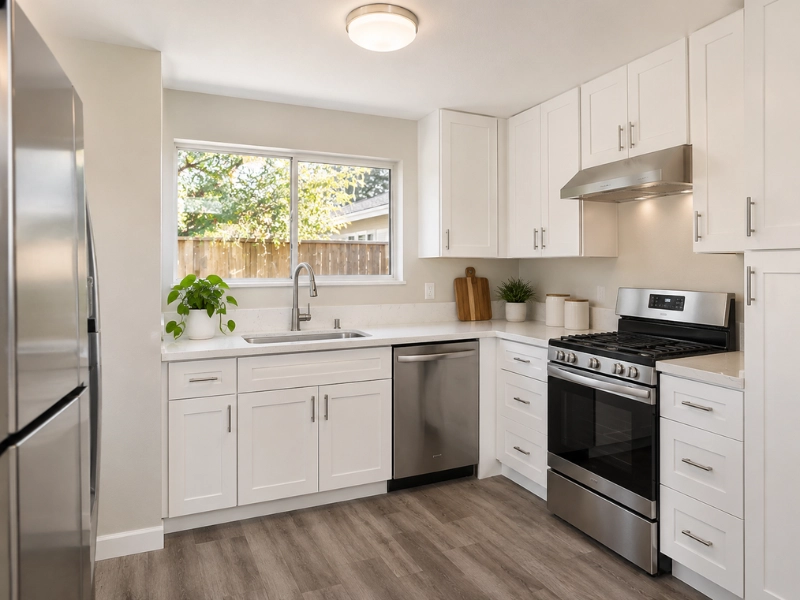

How long to renovate a kitchen depends on three clocks, not one: the design and permit phase before demolition, the on-site work, and the lead time on cabinets and countertops. Most online answers count only the middle one. In a Bay Area city, the first and third often decide your move-in date.
By Ray Evgeny Khaikin, Owner & General Contractor · Last updated November 21, 2026
The most common mistake I see is a homeowner who plans around the demolition date and forgets everything that has to happen first. I will not give you one number of weeks, because any number that ignores your layout, your city and your materials is a guess. I can show you what each phase depends on, so you can ask any contractor the right questions. Our kitchen remodeling service page covers what we build. This post covers when.
What takes the most time before demolition starts?
The longest stretch is often the one with no one working in your kitchen: design, a written contract, the permit, and ordering materials. None of it shows up in an on-site timeline, and all of it comes before the first cabinet comes off the wall.
Here is the pre-construction sequence, in order:
- Design and measurements. The layout drives everything downstream. A like-for-like refresh moves faster through every later step than a plan that moves plumbing, gas or walls.
- A written quote and contract. California requires a written contract for all home improvement projects over $500, according to the Contractors State License Board. The same page says the down payment cannot be more than $1,000 or 10 percent of the contract price, whichever is less. A contract is also the document where the schedule belongs.
- Plans submitted for permit. The city reviews what you drew before you are allowed to start.
- Material orders. Selections have to be final before cabinets and countertops can be ordered, and that is where many projects slip. We come back to this below.
Three of the four steps depend on decisions and paperwork, not on a crew. Quick selections and quick answers to city questions shorten this phase more than any contractor can.
Which kitchen work needs a permit in Hayward?
Most of it. Hayward says a permit is required for most kitchen remodel projects, per the City of Hayward kitchen remodel handout.
That matters for your schedule because the permit is a gate, not a formality. Work cannot begin until it clears.
Hayward’s handout also spells out where the line falls between permit and no permit:
- Countertops. If you remove and replace them in the exact same format and location, no permit is required. Adding an island or peninsula, or changing the length of the countertop, requires drawings and a permit.
- Cabinets. If you remove and replace them in the same location and layout, no permit is required. Adding island or peninsula base cabinets requires a permit.
- Layout changes. Any change from the original layout always requires a permit.
- Finishes. Re-painting the kitchen, re-facing or painting cabinets and adding new flooring do not require a permit.
Some requirements apply however you scope the job. All work must meet current building code standards, which the handout lists as building, electrical, mechanical, plumbing, energy and CALGreen. Smoke and carbon monoxide alarms must be installed when the value of the work exceeds $1,000. Structural calculations may be required if a bearing wall is removed or replaced. Anything like that belongs in the drawings before submittal, not discovered during construction.
If you live in San Jose, Fremont, Palo Alto or any other city we serve, check that city’s own rules. Check that city’s own requirements before you plan around Hayward rules. Our kitchen cost guide for San Jose shows how the scope you choose affects the budget, and the scope you choose also affects the permit path.
How long to renovate a kitchen on site, phase by phase?
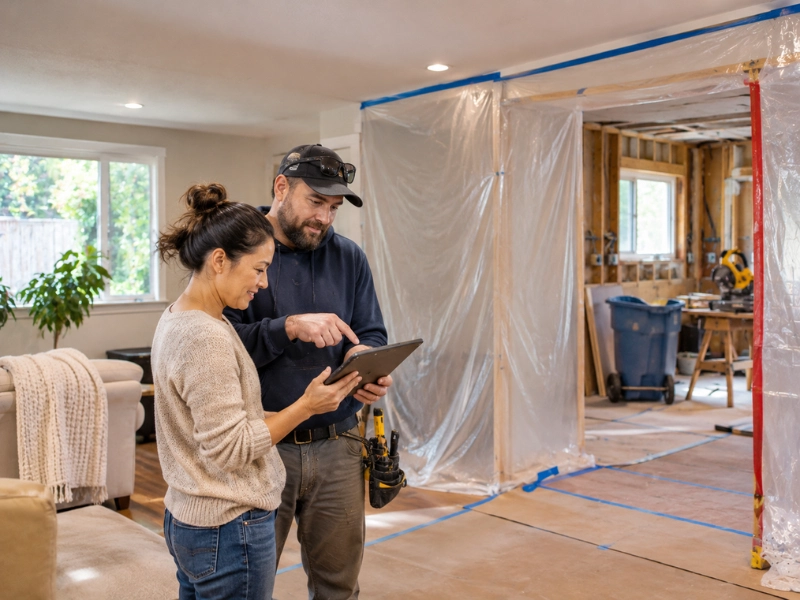
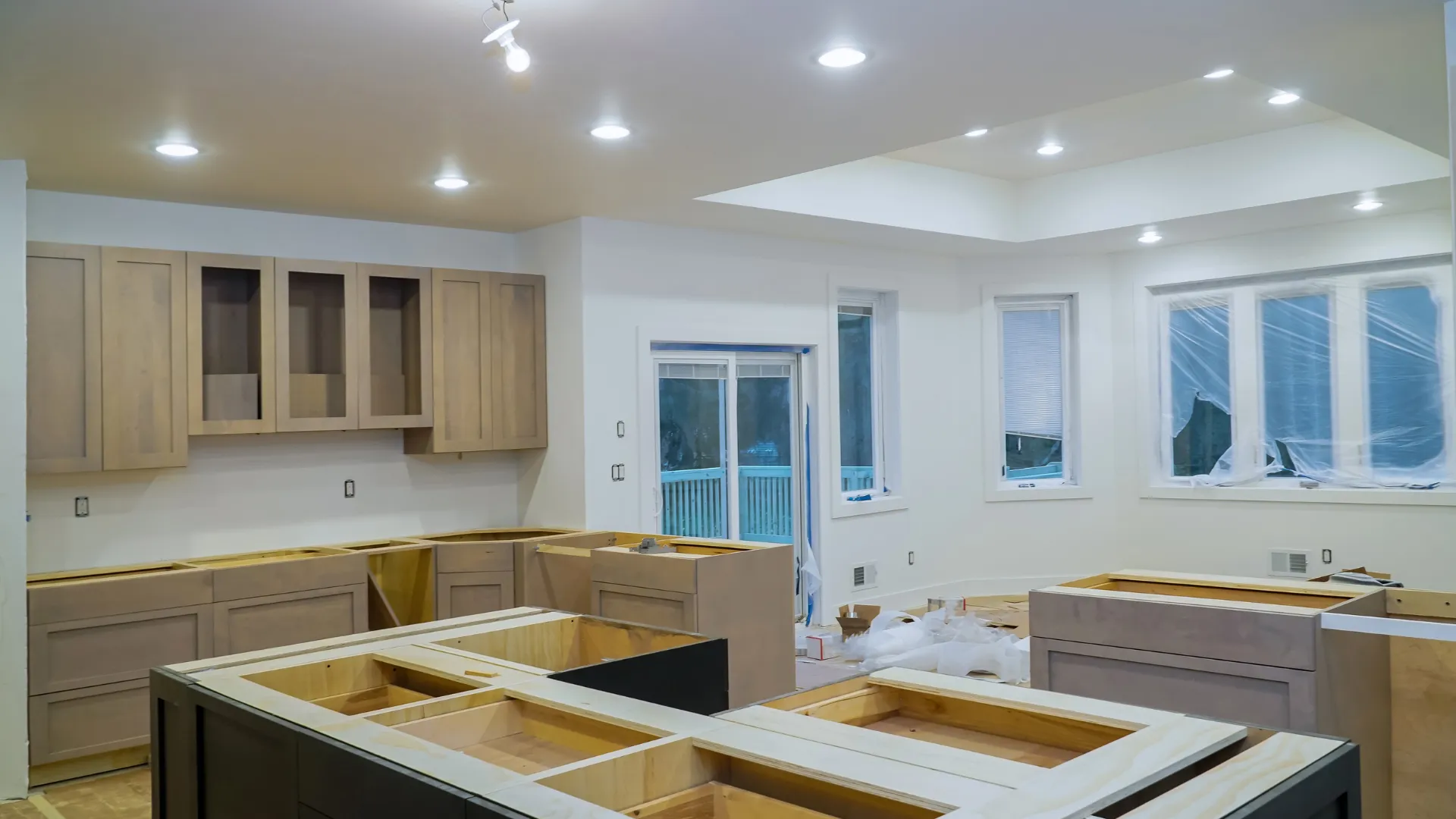
Once the permit is issued and materials are on order, on-site work runs in a fixed sequence, and each step has to finish before the next can start. I will not put weeks on the phases, because they vary with kitchen size and scope. I will tell you what each one is and what slows it down.
| Phase | What happens | What can slow it down |
|---|---|---|
| Demolition | Old cabinets, counters and finishes come out; the room is protected | Surprises behind walls, such as old wiring or damaged framing |
| Rough-in | Plumbing, electrical and any framing changes behind the walls | A changed layout, or a circuit count that has to be corrected |
| City inspection | The building department checks the work before walls close | The inspector’s availability and any items to correct |
| Walls and flooring | Drywall, patching, paint prep and floor work | Drying and curing time between steps |
| Cabinet installation | Boxes set, leveled and secured | Late or incomplete cabinet delivery |
| Countertops | Measured to the installed cabinets, then fabricated and set | Fabrication lead time (see next section) |
| Fixtures and finish | Backsplash, plumbing fixtures, lighting, hardware, final cleaning | A missing part or a wrong finish |
| Final walkthrough | You and your contractor go through the list together | Punch-list items to fix |
Two points in that table deserve more space.
Surprises behind walls are real. Opening a wall can reveal wiring or framing that does not match what the plans showed. Each discovery can add time and cost, depending on the repair. Ask how changes are priced and approved in writing before they happen, so a surprise does not turn into a dispute.
Inspections are checkpoints, not delays, if you plan for them. Rough work has to pass before walls are closed. If the inspection is scheduled promptly and the work is right the first time, the pause is short. If it fails, the correction and re-inspection add time.
For a closer look at how a job runs from our side, see our post on how kitchen remodeling works in Fremont.
Why do cabinets and countertops set the schedule?
Because they are the longest waits that are not in anyone’s hands once the order is placed. Everything after demolition leads up to the moment cabinets go in, and the countertop work that follows depends on them.
Here is how that plays out:
- Cabinets are ordered, not grabbed off a shelf. Whether the delivery is quick or slow depends on the line, the finish and the supplier. Ask your contractor for the confirmed delivery estimate in writing before you sign.
- Countertops follow the cabinets. They are measured to what is actually installed, then made, then set. If the cabinet layout changes at the last minute, the countertop work changes with it.
- One late piece can hold up the whole room. A backsplash cannot be finished until the countertop is in, and the final fixtures follow the backsplash.
Lock your selections before the permit comes back, not after. We would rather place the cabinet order while the city reviews the plans than have a crew waiting on a delivery. That is how a good contractor shortens the calendar without rushing the work.
What should a written schedule include?
A written schedule should show every phase above, with a start and a finish for each, plus the permit step and the material delivery dates. A contractor who only gives you a number of weeks has hidden the part you most need to see.
When we write one, it covers:
- The permit phase. What we are submitting, to which city, and what happens if the city asks for changes.
- Material lead times. The ordered items, who ordered them and the confirmed delivery estimate.
- On-site phases in order, with the inspection stops marked.
- How changes are handled, including who approves a change in writing and how it affects cost and time.
- The final walkthrough, so you know when the job is truly finished and what is left on the punch list.
If you are comparing bids, put the schedules side by side. The most complete schedule usually comes from the contractor who has thought the job through.
Our free consultation includes a fixed written quote within 7 days, and we are glad to walk through the schedule at the same time.
Frequently Asked Questions
How long does it take to install kitchen cabinets?
Installation depends on the size of the kitchen and how many boxes there are, and it can only start after demolition, rough-in work, inspection and wall and floor finishing are done. The bigger factor is delivery: the cabinets have to arrive complete before the crew can set them. Ask for the confirmed delivery estimate before you sign.
How long does the average kitchen remodel take?
There is no single average that fits a Bay Area home, because the schedule includes a permit phase, material lead times and on-site work, and each depends on your scope and your city. A written schedule from your contractor will give you the actual sequence.
How long does it take to remodel a kitchen?
It takes as long as all the phases add up: design, contract, permit review, ordering, demolition, rough-in, inspection, finishes and a final walkthrough. The biggest swing factors are layout changes, delivery lead times and surprises behind the walls. Ask any contractor to show the schedule phase by phase.
How long does it take to renovate a kitchen?
The answer is the same as for a remodel: it depends on the scope, the permit path and the materials you choose. Work cannot start until the building permit is issued, and the on-site work runs in a fixed order after that. Your contractor can give you a realistic window once the plan and selections are final.
How long does it take to install a kitchen?
Installing a whole kitchen means cabinets first, then countertops measured to them, then the backsplash, fixtures and finish work. Each step waits for the one before it. Delivery timing for cabinets and fabrication time for countertops usually set the pace.
How long does it take to refinish kitchen cabinets?
Refinishing leaves the boxes in place, so it skips demolition and cabinet ordering, but the length still depends on the number of doors and the finish system. We would not quote a number without seeing the cabinets. In Hayward, re-facing or painting cabinets does not require a permit, but check your own city’s rules.
How long does a kitchen remodel take?
Plan for three stretches: the pre-construction phase of design, contract, permit and ordering, then the on-site work, then the final walkthrough. In Hayward, a permit is required for most kitchen remodel projects, and any change in layout always requires one, so scope matters.
Contact Us
Free in-home consultation with a fixed written quote within 7 days. Contact Construction Remodeling in Bay Area and we will walk through your layout, the permit step for your city and the delivery dates for your materials.
Construction Remodeling in Bay Area
111 Jackson St, Hayward, CA 94544
Phone: (510) 990-9243
Email: constructionremodelinginbay@gmail.com
Hours: Mon–Thurs 8a–6p · Fri–Sun 9a–4p
CSLB Lic #1095283 (Active CSLB B, General Building Contractor)