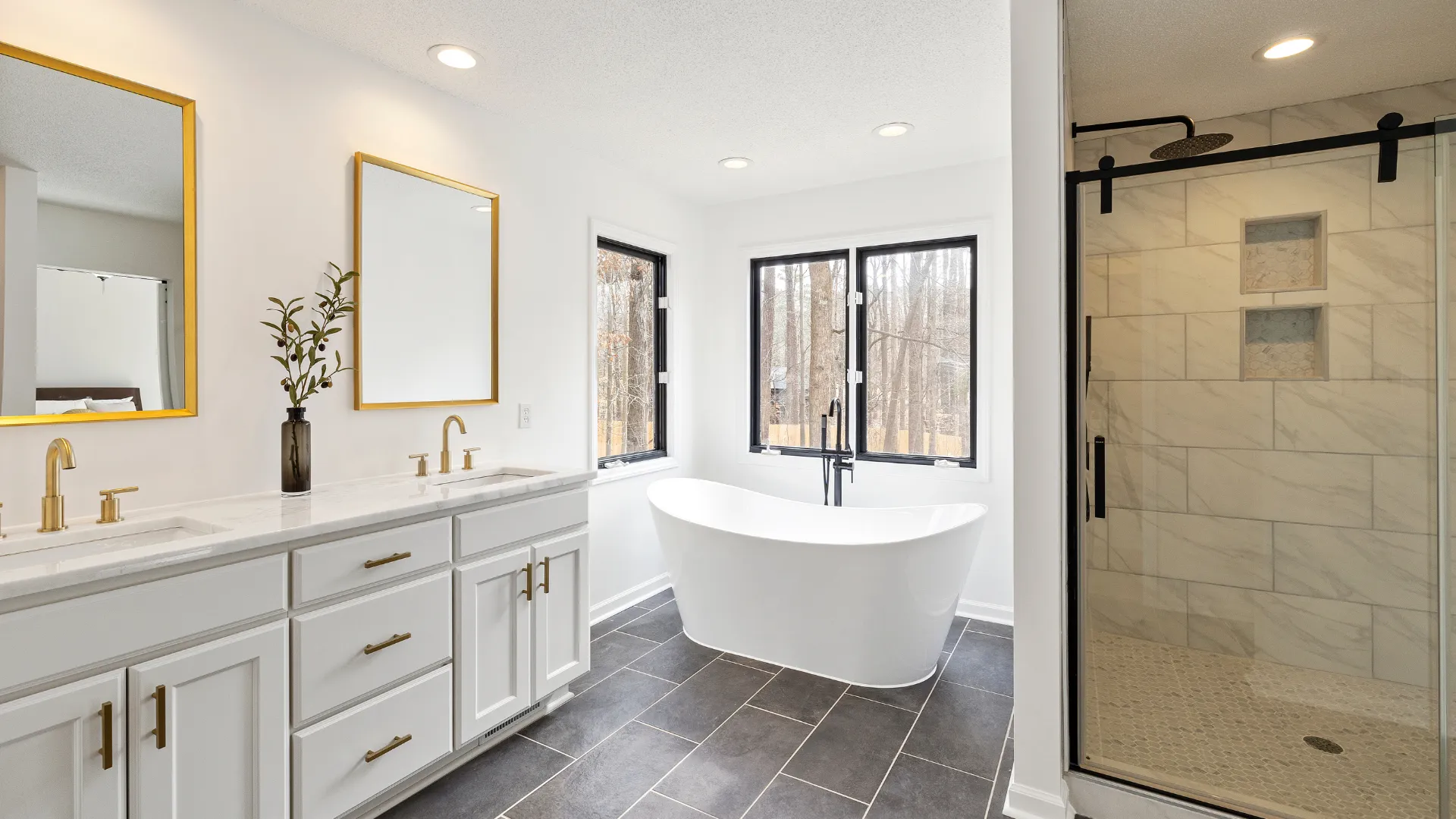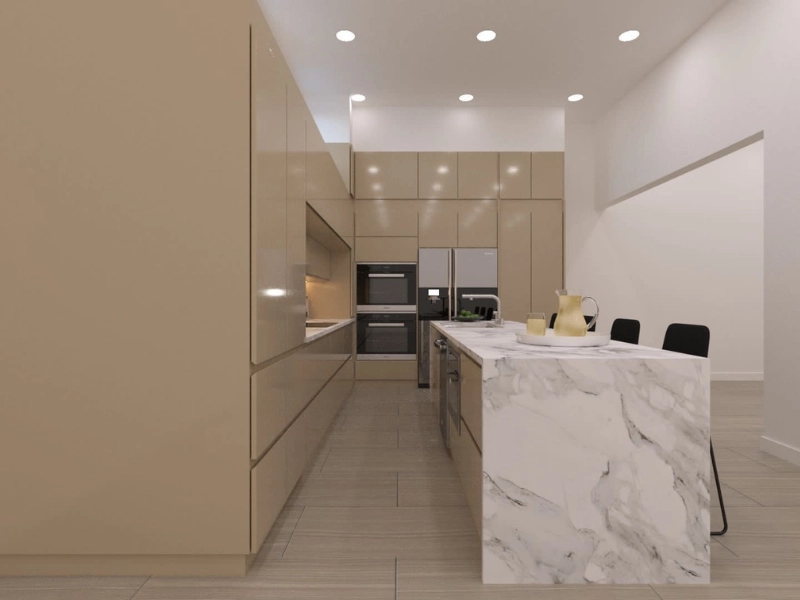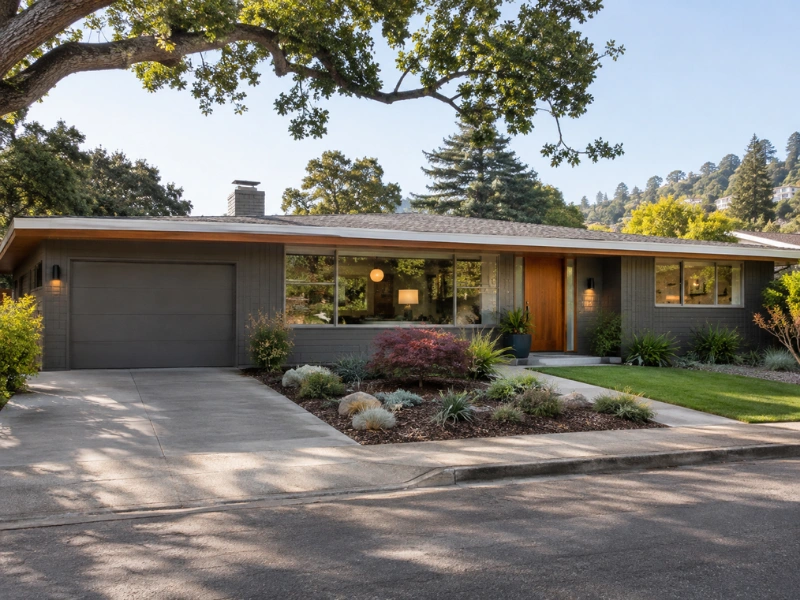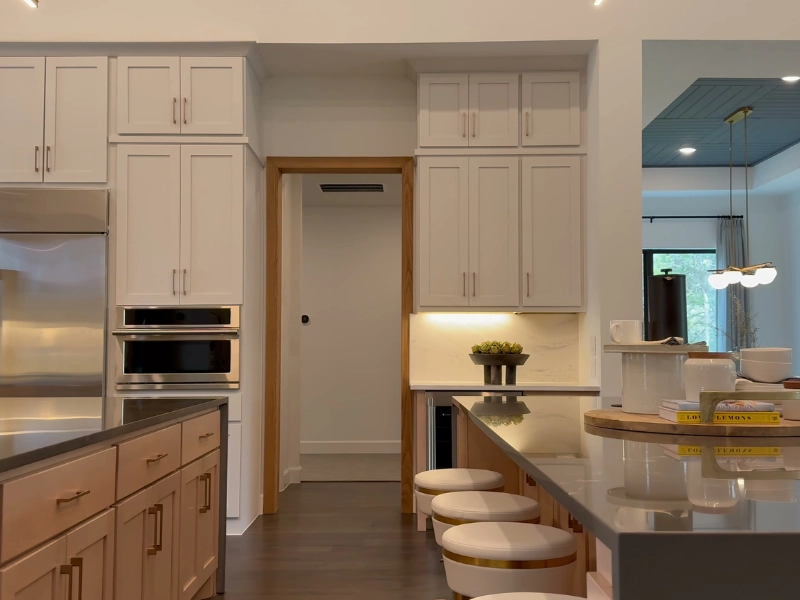

Kitchen remodel contractors in Hayward run the whole job, not just the cabinets: they plan the layout with you, pull permits through the city’s Building Division, demolish safely in older homes, coordinate plumbing and electrical, pass inspections and finish the room. At Construction Remodeling in Bay Area, we’ve done that from our Jackson Street office since 2015, under CSLB License #1095283.
By Ray Evgeny Khaikin, Owner & General Contractor · Last updated November 16, 2026
A kitchen contractor handles everything that turns new boxes into a working, legal room. A cabinet showroom sells and sometimes installs cabinets. By contrast, a licensed general contractor also moves plumbing, adds circuits, patches walls, pulls the permit and answers to the inspector.
Here’s how the main options compare on a typical Hayward kitchen:
Who you hire | License needed | Pulls Hayward permits | Plumbing and electrical | Best for |
General contractor | CSLB “B” license | Yes | Coordinates licensed trades | Full remodels and layout changes |
Cabinet showroom | Varies by installer | Rarely | No | Same-layout cabinet swaps |
Handyman | None for small jobs | No | No | Small repairs only |
Kitchen designer | None required | No | No | Drawings and selections |
That handyman row has a hard limit. In California, unlicensed work is capped at small jobs, currently under $1,000 including labor and materials. So almost any real kitchen project needs a licensed contractor, and you can check any license on the Contractors State License Board’s website in a few seconds.
Also, notice who carries responsibility for the whole room. When a designer, a cabinet shop and three separate trades each do a piece, nobody owns the gaps between them. For example, if a vent duct runs into a new upper cabinet, each party can point at another. With a single general contractor, those gaps are ours to solve, and that’s usually where the real value of hiring one sits.
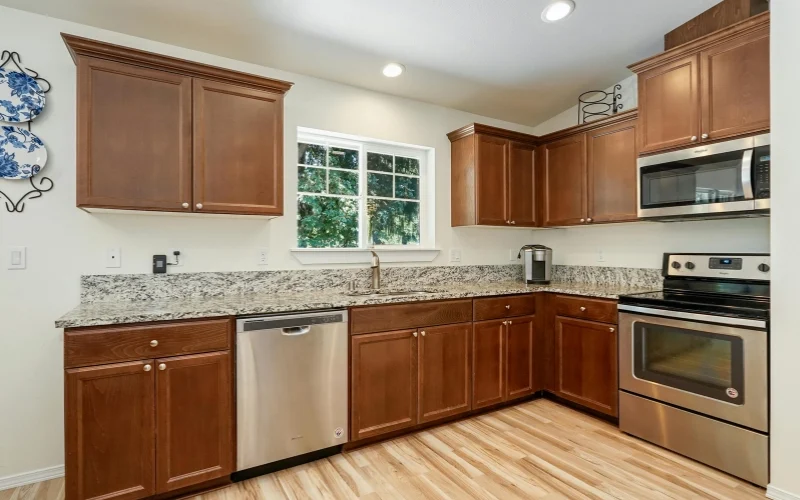
It matters because many Hayward homes were built before 1978, when lead paint was still sold for houses. Neighborhoods like Fairway Park, Schafer Park and much of the Harder-Tennyson area grew up in the post-war building boom, so the original kitchen trim, cabinets and window sills often carry old paint layers.
Federal rules take this seriously. The EPA’s Renovation, Repair and Painting Rule requires anyone paid to disturb painted surfaces in a pre-1978 home to be certified and trained in lead-safe work practices. In a kitchen, demolition disturbs almost every painted surface at once.
So in an older home, our demo days look different:
Lead isn’t the only legacy material, either. Older sheet vinyl, the adhesive under it and some textured “popcorn” ceilings can contain asbestos. When we suspect it, we have samples tested before demolition, rather than finding out after the dust has spread. As a result, the schedule stays honest, and your family isn’t exposed to something that could have been handled safely from day one.
We submit plans, pay fees and schedule inspections through the city, so you don’t have to stand in line for any of it. The City of Hayward Building Division now runs most of this through its e-Permits portal. That portal also shows inspection results and even an inspector’s estimated arrival time.
The city also sets construction hours: Monday through Saturday from 7 a.m. to 7 p.m., and 10 a.m. to 6 p.m. on Sundays and holidays. Because of that, we plan noisy work like demolition and tile cutting inside those windows, which keeps neighbors on your side.
Meanwhile, a permitted kitchen has to meet California’s codes, not just look good. In practice, that usually means:
Many homeowners ask whether a “small” kitchen needs a permit at all. In short, if you’re moving plumbing, adding circuits or opening a wall, the answer is almost always yes. Skipping it can cause trouble later, especially when you sell and a buyer’s inspector spots new work with no permit on file.
Planning a kitchen remodel in Hayward?
Call: (510) 990-9243
Email: constructionremodelinginbay@gmail.com
Free in-home estimate with a written, itemized quote.
Start with how you actually use the room, then let the layout follow. A household that cooks big family meals every night needs a different kitchen than a couple who mostly reheats and entertains.
So before we draw anything, we ask a few practical questions:
Appliances deserve special attention early. Cabinet widths, outlet locations and the hood size all depend on the exact model of range, fridge and dishwasher. Therefore, we ask clients to pick their appliances during design, not after demolition, because a late swap can force changes to cabinets that are already drawn.
Next, think about landing space. Every major appliance needs clear counter beside it, especially the fridge, the cooktop and the microwave. In many Hayward tract-home kitchens, the original layout squeezes those zones together. Opening a wall to the dining area often fixes it, but that means checking whether the wall is load-bearing first.
Finally, plan the lighting in layers. Overhead light fills the room, under-cabinet light covers the counters, and a pendant or two over an island adds focus. Together, they make a small East Bay kitchen feel far bigger than it is.
Most of our clients stay home through the whole project, and a little planning makes that much easier. First, set up a temporary kitchen in the dining room or garage with the old fridge, a microwave, a coffee maker and a folding table.
Here’s what else helps:
Demolition week is the loudest and dustiest. After that, the house usually calms down. Most full remodels run about 6 to 10 weeks of construction, so it helps to know which days to plan errands or work from somewhere else. We tell you those days in advance, rather than leaving you guessing.
If someone in the house works nights or has young kids napping, mention it at the start. That way, we can stack the loudest tasks into the same few days and keep quieter work, like trim and paint, for the rest.
Also, keep a simple grocery plan. Slow cookers, sheet-pan meals and a few nights of takeout from spots along B Street or Mission Boulevard make the weeks pass faster. Ultimately, the families who prepare tend to remember the new kitchen, not the weeks without one.
We’re based in downtown Hayward, so most of our kitchens are a short drive away. If you’re looking for kitchen remodel contractors in Hayward CA, we work in Mt. Eden, Fairway Park, the Hayward Hills, Santa Clara, Schafer Park and the Harder-Tennyson area.
Beyond Hayward, we also cover:
Each area has its own quirks. In San Lorenzo Village, for instance, many kitchens are small galley rooms from the original 1940s and 1950s tract builds, so opening them up often means rerouting old plumbing. Up in the Hayward Hills, by contrast, steep driveways and tight street parking change how we stage deliveries and dumpsters. Knowing those details ahead of time keeps the first week of a project smooth.
For homeowners comparing kitchen remodeling contractors near Hayward and Union City CA, our Union City guide to kitchen remodeling near me covers that city’s tract homes. Likewise, our post on how kitchen remodeling works in Fremont walks through that city’s permit process.
If you’re hiring a kitchen contractor in the East Bay, distance matters more than most people expect, since a local crew shows up faster for inspections and punch-list visits. You can see finished work in our kitchen remodeling portfolio, then read the full scope on our kitchen remodeling services page before you call.
Ask who will run your job day to day, whether the plumbers and electricians are employees or subcontractors, and how change orders get priced and approved in writing. Those answers do more for vetting a kitchen contractor than a low bid does, and they’re the best way to settle how do you choose a kitchen remodeling contractor beyond checking the license and reviews.
We usually order the cabinets and counters ourselves, so measurements, delivery and damage claims stay our responsibility, while the manufacturer’s warranty covers the product and our 5-year workmanship warranty covers the installation. The answer to who orders the cabinets, you or the contractor, matters because whoever places the order owns the problem if a box shows up wrong, damaged or late.
Plan on booking about two to three months ahead, because design, permits and cabinet lead times usually add 2 to 6 weeks before demolition even starts, and custom cabinetry can take longer. In practice, how far ahead should a kitchen remodel be booked depends most on whether your cabinets are stock, semi-custom or fully custom.
The usual sequence of trades in a kitchen is demolition, framing, rough plumbing and electrical, inspection, insulation and drywall, cabinets, countertops, backsplash, fixtures and final inspection. Delays most often start with a failed rough inspection or a late appliance choice, since cabinets can’t be finalized without exact appliance dimensions.
A wrong or damaged cabinet usually pauses countertops, because the fabricator can’t template until every base cabinet is set and level, although painting and electrical trim can often keep going. Replacement boxes can take anywhere from a few days to several weeks depending on the maker, so we inspect every cabinet the day it arrives and file claims right away.
Construction Remodeling in Bay Area
Address: 111 Jackson St, Hayward, CA 94544
Phone: (510) 990-9243
Email: constructionremodelinginbay@gmail.com
Hours: Mon-Thurs, 8 AM to 6 PM; Fri-Sun, 9 AM to 4 PM
Licensed general building contractor since 2015 (CSLB License #1095283).
Serving Hayward, San Lorenzo, Castro Valley, San Leandro, Union City and Fremont. Call for a free estimate, or use our contact page to book a visit.