
How Does Flooring Installation Work On A Fremont Slab?
- Recent Blogs
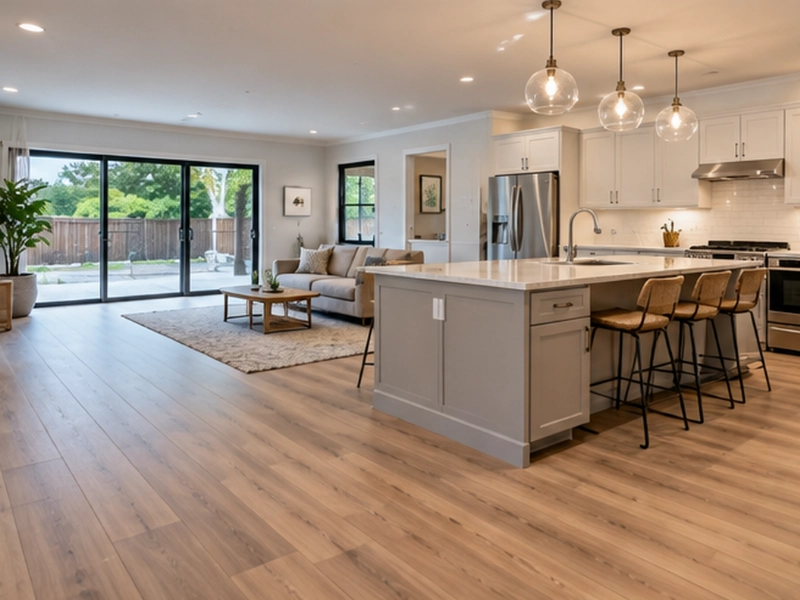
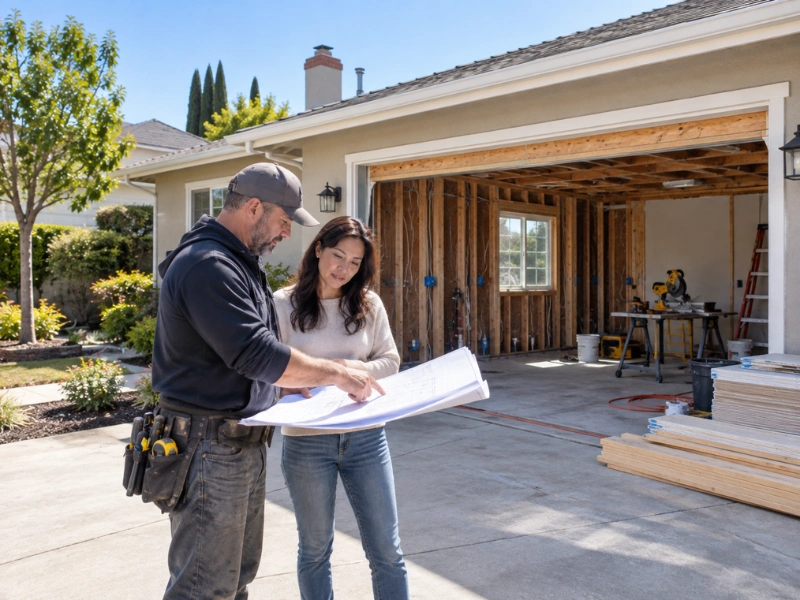

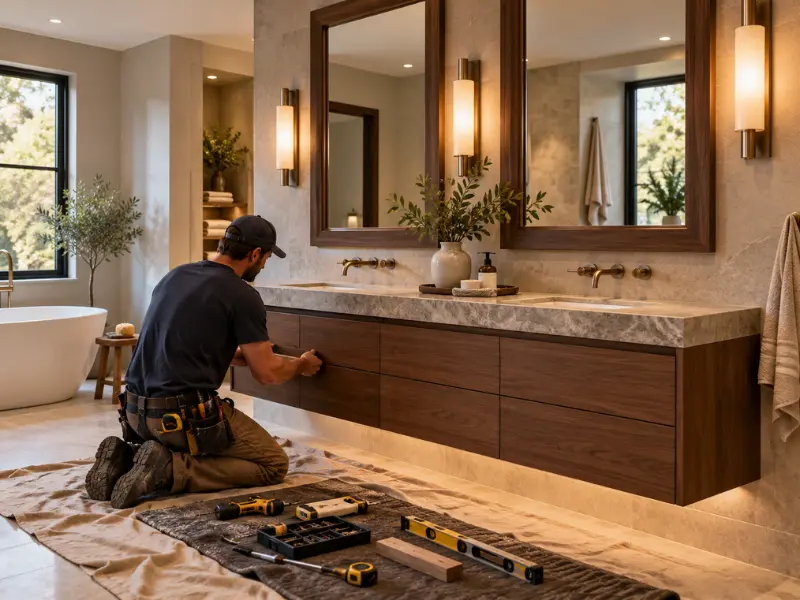
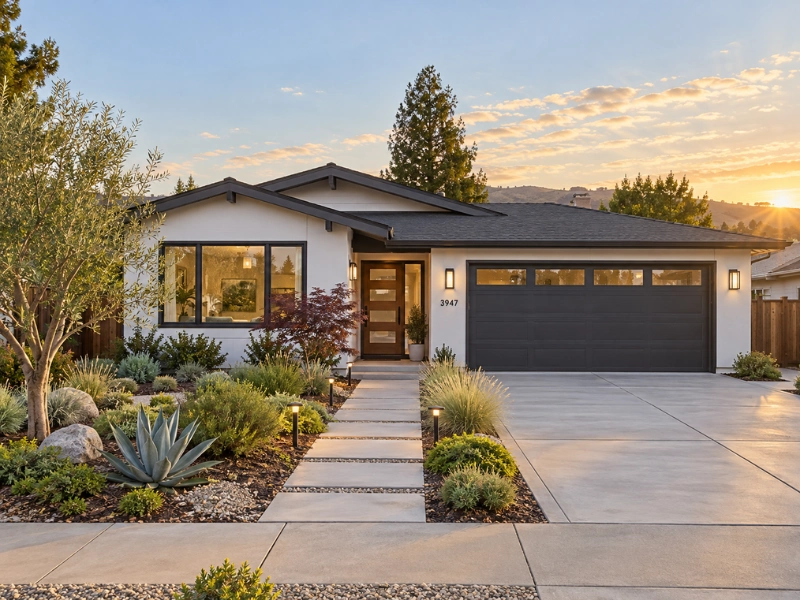
Installation of new flooring above a concrete slab in Fremont requires some preparation below the surface. You’ll need to make sure there are no moisture issues to deal with, and that it is level. Old flooring will also need to be handled properly. Choose a material that will work well with concrete such as luxury vinyl planks, tiles or glue-down engineered wood. At Construction Remodeling in Bay Area, we check the slab before recommending any material.
By Ray Evgeny Khaikin, Owner & General Contractor · Last updated October 28, 2026
Which materials suit flooring over a concrete slab?
Moisture resistant and nail free. Many new areas of Fremont (Warm Springs, Ardenwood) will have flooring installed onto a concrete slab. Many homes in Centerville/Niles are built on raised wooden subfloors.
The options available are often more than people expect when they ask what flooring can go on top of a concrete slab. Here’s how the main choices compare:
Material | How it’s installed on a slab | Strengths | Watch out for |
Luxury vinyl plank | Floating or glue-down | Water-resistant and forgiving | Needs a flat slab and expansion gaps |
Porcelain or ceramic tile | Thinset mortar | Very durable and moisture-proof | Slab cracks can telegraph through without a membrane |
Engineered hardwood | Glue-down or floating | Real wood look on concrete | Needs moisture testing and the right adhesive |
Laminate | Floating over a vapor barrier | Budget-friendly and hard-wearing | Swells if water gets underneath |
Solid hardwood | Usually over a wood subfloor, not directly on concrete | Can be refinished many times | Rarely the right fit directly on a slab |
Engineered wood and laminate use composite cores, so it’s worth checking the label. The EPA’s page on formaldehyde emission standards for composite wood products explains that these products must be labeled TSCA Title VI compliant.
For more on wood floors specifically, our Fremont hardwood flooring guide compares solid and engineered options.
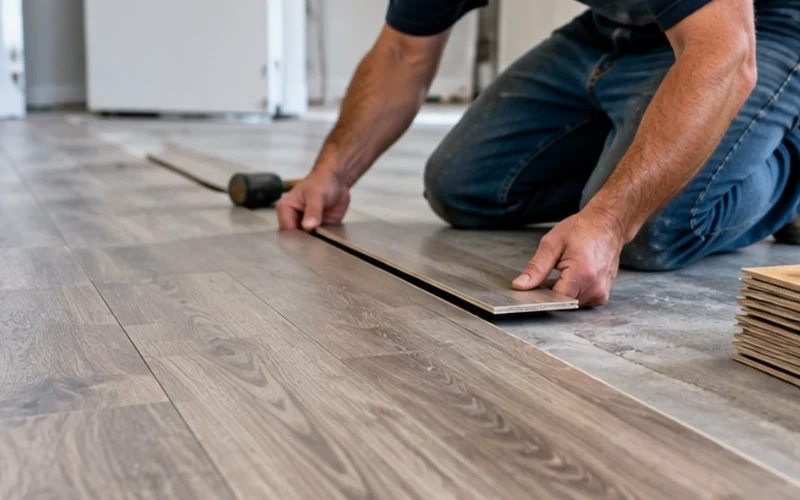
Why does slab moisture testing come first?
As concrete is a hygroscopic material, excessive moisture can cause damage to the floor. Testing will tell you what materials and adhesives can be used and whether any pre-treatment is necessary.
Symptoms will vary from buckling of boards, losing adhesion from adhesive, a damp smell coming from under rugs or a white powdery substance on edges. It can also show high levels of moisture even when the slab looks dry. Most flooring manufacturers will require some form of testing. They usually have their own requirements but generally relative humidity pins are inserted into the slab and surface testing is carried out to see how much moisture is being emitted by the concrete. If the results come back too high then the usual solution would be to apply a moisture mitigation coating or a vapour barrier designed for that product.
Flatness is very important when fitting floating floors or large tiles. The slab should be flat with no bumps or hollows. Any low areas would be filled with levelling compound and the high areas ground down.
What about the old flooring underneath?
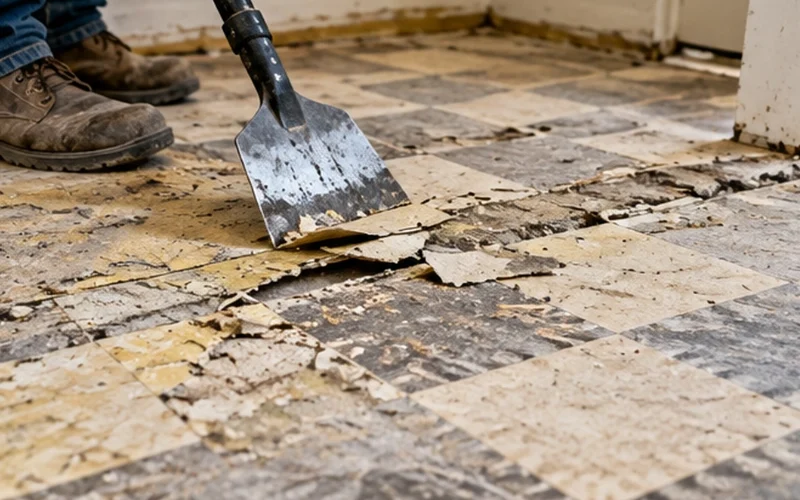
It needs a careful look, especially in older homes. Old resilient flooring can contain asbestos, and removing it the wrong way can release fibers into the house.
The EPA’s guide to protecting your family from asbestos exposure lists vinyl floor tiles, the backing on vinyl sheet flooring and some adhesives as places asbestos may be found. It also warns against sanding or scraping flooring that may contain asbestos, and suggests installing new flooring over it when possible.
So, in a home with older vinyl or mastic, the safest first step is testing a sample. Depending on the result, the old floor can be covered, removed by a qualified abatement contractor or removed normally if it’s clear.
How does luxury vinyl plank perform on a slab?
Very well, when the slab is prepared properly. Luxury vinyl plank is one of the most popular choices for Fremont slab homes because it handles spills, pets and everyday wear.
A few details decide how well it lasts:
- Rigid-core vs flexible planks, since rigid cores hide minor slab imperfections better
- Wear layer thickness, which matters most in busy rooms and with pets
- Underlayment, for comfort, sound and sometimes moisture protection
- Expansion gaps at walls and doorways, so the floor can move with temperature
- Direct sun, since large south- or west-facing windows can heat planks and cause movement
Floating LVP also requires space to move under any cabinets and islands. As a result, kitchen cabinets are usually placed on top of the slab with the LVP installed around them.
What should flooring contractors check before quoting?
The slab, the transitions and everything that has to move out of the way. Good flooring contractors quote the whole job, not just the square footage.
So, how much does flooring installation cost? It depends on the material, the size of the space and how much prep the slab needs. Our flooring installation service lists our typical Bay Area price ranges by material. Here’s what else should be in a quote:
- Moisture testing and any treatment
- Leveling or grinding for uneven spots
- Old flooring removal, including testing if asbestos is possible
- Baseboards, transitions and door trimming
- Moving furniture and appliances
People also ask, “How long does flooring installation take?” A single room can often be done in a day or two. A whole-house project usually takes longer, especially when leveling compound or moisture coatings need time to cure.
Who installs flooring near Fremont and Milpitas?
Our in-house crew covers Fremont and the surrounding area, including Warm Springs, Ardenwood, Mission San Jose and Centerville, plus Milpitas, Union City and Newark. We work out of Hayward, so Fremont projects are a short drive.
If you’re planning flooring installation in Fremont CA, we’re happy to test your slab and walk through options. And if you’ve asked “who installs flooring near Fremont and Milpitas California,” we do, as standalone jobs or as part of a larger remodel.
If you searched for flooring contractors Fremont CA, see our Fremont service page. For a look at whole-home options and resale, our Sunnyvale flooring installation guide covers material choices in more depth.
How do you get a flooring estimate?
Call us, and we’ll visit to measure, test the slab and look at your existing floors. Then you’ll get a written, itemized quote with prep, materials and installation listed separately.
A good flooring installation should look right on day one and stay flat for years. To get started, contact Construction Remodeling in Bay Area or call (510) 990-9243.
Frequently asked questions
1. What does flooring installation cost in Fremont?
Depending on the type of flooring you want installed, the square footage plus how much prep the slab will need, you can expect to pay more for your flooring if it requires leveling, moisture treatment and/or floor removal. We can provide you with a FREE detailed quote once we’ve measured and tested your slab.
2. Which flooring actually works laid over a concrete slab?
Luxury Vinyl Plank, Porcelain or Ceramic Tile, Engineered Hardwood and Laminate are all great choices for a slab that has been prepared correctly. Solid hardwood will require a wooden subfloor underlay. The correct flooring will depend on the moisture levels, flatness and usage of the room.
3. Does a slab need moisture treatment before flooring goes down?
It will depend. All slabs should be tested. If moisture readings are higher than the manufacturers guidelines of the flooring then a mitigation product will be added or a suitable vapour barrier. One of the most common reasons why new flooring fails is because damp proofing has not been carried out.
4. How long does a whole-house floor take?
Most of our jobs take between several days to a couple of weeks. It will depend on the size of the property, amount of furniture to move and whether any leveling or damp proofing is required. Some products will require curing time which can be a couple of extra days.
5. Can flooring be done while you are still living there?
Yes, usually. Many of our customers will have us working in their homes. There will be some noise, dust and moving of furniture however you should ensure your pets and children are kept away from the area.
6. Is luxury vinyl plank waterproof?
Most LVP is highly water-resistant on the surface, which makes it popular for kitchens and baths. Water that reaches the slab underneath can still cause problems, so spills and leaks should be cleaned up promptly.
7. Can new flooring go over old tile or vinyl?
Sometimes. Floating floors can often go over flat, well-bonded existing flooring. Covering old vinyl may also be the safer choice if it could contain asbestos. Height changes at doorways and appliances need to be checked first.
8. Do I need to move furniture myself?
Not necessarily. We can include moving of furniture and appliances into our quotation. Just ask when requesting your estimate.
Visit or Call Us
Construction Remodeling in Bay Area
Address: 111 Jackson St, Hayward, CA 94544
Phone: (510) 990-9243
Email: constructionremodelinginbay@gmail.com
Hours: Mon–Thurs 8 AM – 6 PM · Fri–Sun 9 AM – 4 PM
License: CSLB Lic. #1095283 · Fully insured · 10-Year Workmanship Warranty
Serving Fremont, Milpitas, Union City, Newark, Hayward, Castro Valley, San Leandro and the wider Bay Area since 2015.