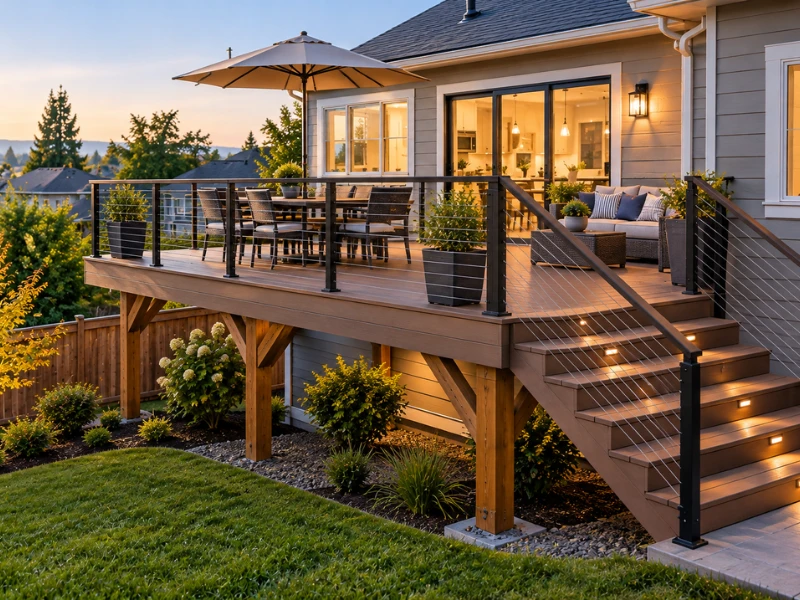
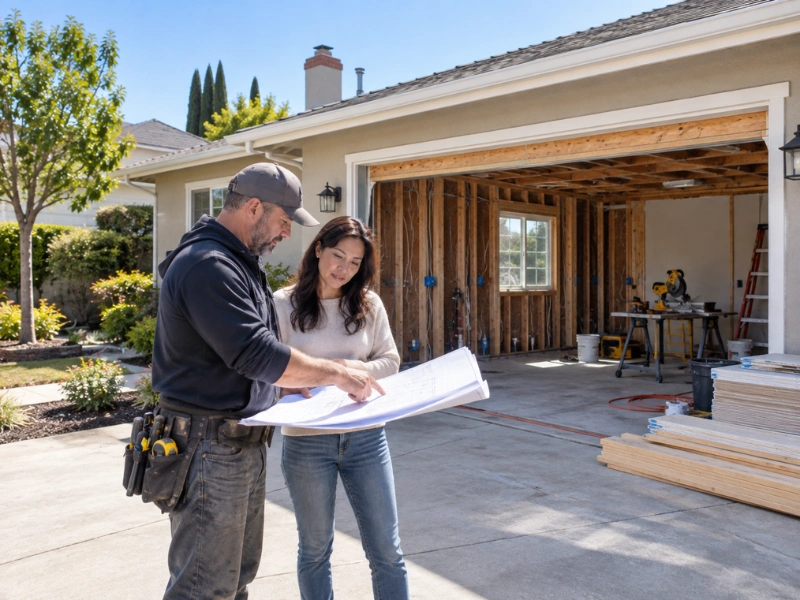

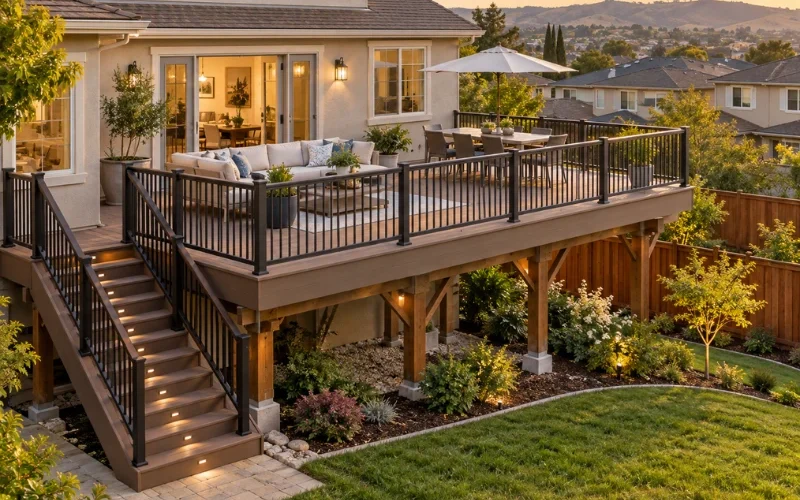
Most Fremont tract home lots offer ground level decks. Most of the homes actually sit fairly level with the ground. If your lot has a slope in the hills then it makes sense to go with a higher deck or multi-level deck. To get the right deck you need to know what height your doors are, what type of soil you have and what you want to use it for.
By Ray Evgeny Khaikin, Owner & General Contractor · Last updated October 29, 2026
Before designing your deck, deck builders will look at the threshold, soil type, drainage and setbacks of the area. This will determine how high the deck can be built and the way it will be constructed.
A good site visit will include:
Also, the Hayward Fault runs right through the area. As a result, builders should meet current California code for connections, posts and hardware, not just aim for “good enough.”
Composite deck boards are great for the East Bay as they do not warp, rot or splinter. However, there are some little idiosyncrasies.
When considering whether you want a deck made from wood or composite take a look at what these materials do:
Redwood and Cedar are also a popular choice due to their natural appearance and low initial cost. However, they will require annual cleaning and sealing every 2-3 years to maintain them in a good condition.
On a flat yard, the deck versus patio choice comes down to door height, budget, upkeep and how you’ll use the space. Here’s how those factors usually point:
Question | Points toward a deck | Points toward a patio |
Door height | Door sits a step or more above grade | Door is nearly level with the yard |
Feel | Warm, wood-like surface | Hard, cool surface for heavy furniture |
Upkeep | Fine with occasional cleaning or sealing | Wants almost no maintenance |
Drainage | Ground stays damp or uneven | Ground drains well and stays firm |
Future plans | May add a pergola or shade structure | May add an outdoor kitchen or fire pit |
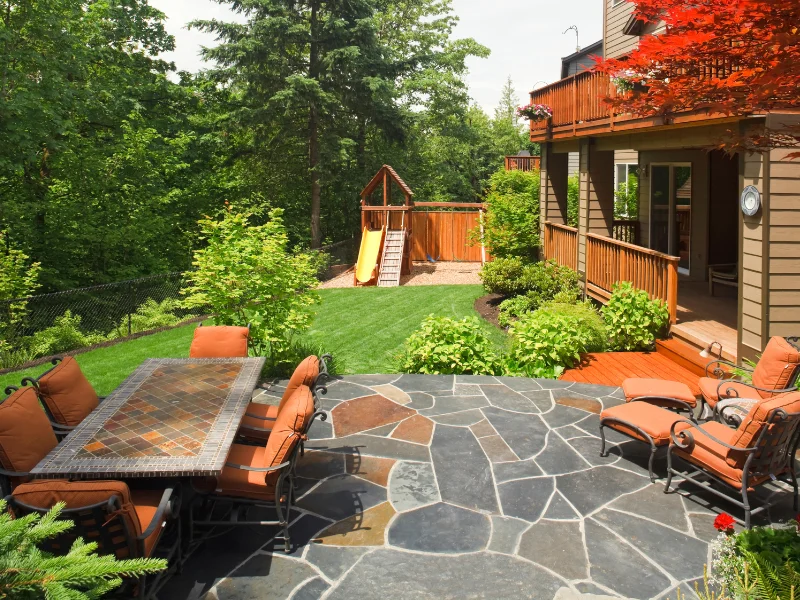
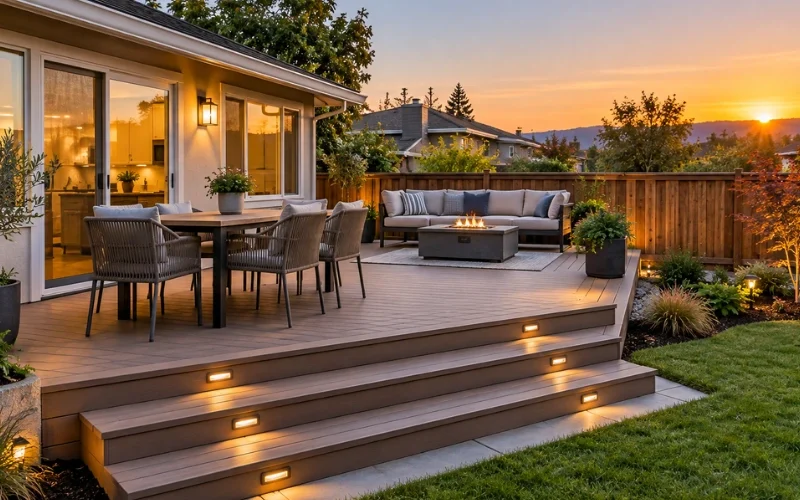
Many Fremont homeowners combine the two. For example, a low deck outside the slider can step down to a paver patio for dining or a fire pit. Our guide to planning a backyard for a Fremont tract home covers that kind of layout in more detail.
Decks need a permit in Fremont unless they’re low, freestanding and not part of an exit path. In other words, most attached decks need one.
According to the city’s list of construction work you can do without a permit, wood decks are exempt only when they meet all of these conditions:
This list was published by the city during a previous code cycle, so best double check with the city. However, it is reliant on having a ledger attached to the house which building departments will want to inspect.
Unpermitted decks also tend to surface during home sales. So even a “simple” deck is worth doing by the book.
A California deck contract should include a fixed scope, a payment schedule, the contractor’s license number and a down payment within state limits. Those rules protect you no matter who you hire.
Before you even ask how much does a deck cost, know the payment rules. The Contractors State License Board’s home improvement contract guide explains that:
Also, check that the contract names materials by brand and color, and puts railing style, stair count and permit responsibility in writing.
Permits, material lead times, inspections and weather set the pace of a deck project, more than the actual building. The construction itself is often the fastest part.
So anyone asking how long does it take to build a deck should plan around a few things:
Planning the permit early is the easiest way to keep the whole project on track.
We build decks across Fremont, Hayward, Union City, Castro Valley and San Leandro. Our office is in Hayward, so most Fremont site visits are a short drive.
If you’re comparing deck builders in Fremont CA, start with our backyard decks service page. People asking who builds decks near Fremont and Hayward California can also see our Fremont and Hayward pages.
And if you’re weighing deck contractors Fremont CA by past work, our portfolio shows finished projects across the East Bay.
Call (510) 990-9243 or use our contact page to book a free in-home consultation. You’ll get a fixed written quote within 7 days, and every build comes with our 5-year workmanship warranty.
Ground-level decks and patios in the Bay Area typically run about $45 to $85 per square foot. Elevated and composite decks usually land between $80 and $150 per square foot. Size, height, railings, stairs and access to the backyard all move the final number.
Composite decks are generally a better option for long term use as they are very low maintenance and will cope well with the wet winters and sunny summers. Redwood or Cedar are cheaper and more natural looking but will require regular sealing. If you have a sunny west facing garden choose a pale composite.
Patios are often the ideal option for a level tract home especially if the door is almost flush with the ground. If there is a step up or the ground remains soggy in the winter then a low deck might be a better option. Many homeowners will have a small deck at the door and then a larger patio.
Most decks will take around 2-6 weeks to build. Permits in Bay Area cities can take 2-8 weeks depending on the size of project. Larger outdoor living projects can take 6-12 weeks.
No. A free standing deck will have its own posts and footings. There will be a small gap between the house and decking. This can make getting permits easier for low decks and you won’t need to drill into your siding. Attached decks can make you feel more attached to your home however the decking must be properly flashed and bolted onto the ledger.
Construction Remodeling in Bay Area
Address: 111 Jackson St, Hayward, CA 94544
Phone: (510) 990-9243
Email: constructionremodelinginbay@gmail.com
Hours: Mon–Thurs 8 AM–6 PM · Fri–Sun 9 AM–4 PM
CSLB Lic #1095283 · Fully insured · 5-year workmanship warranty. Serving Hayward, Fremont, Union City, Castro Valley, San Leandro and the wider Bay Area.