What Makes Hardwood Flooring Last In A Hayward Home?
- Recent Blogs
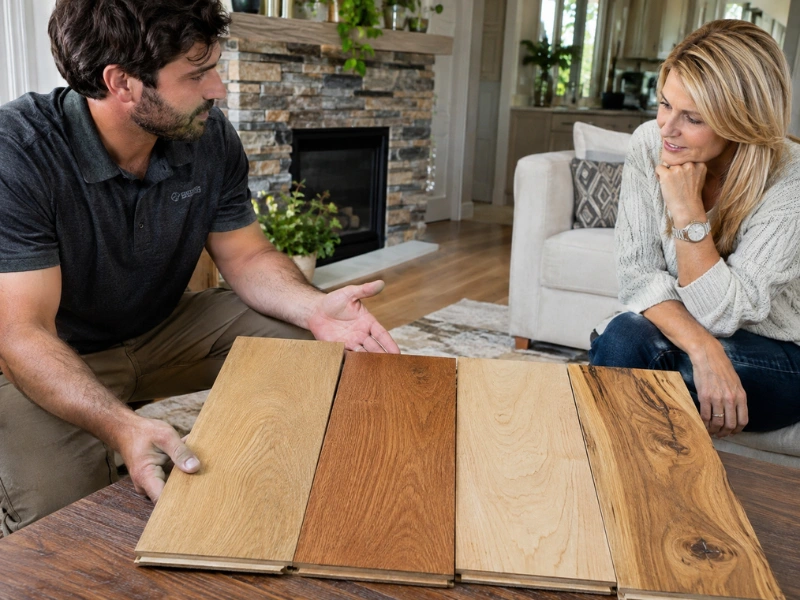
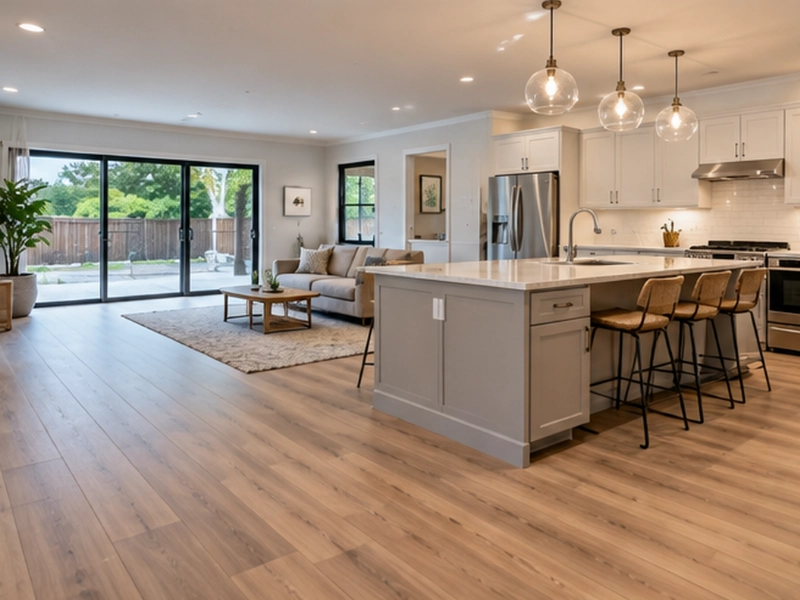
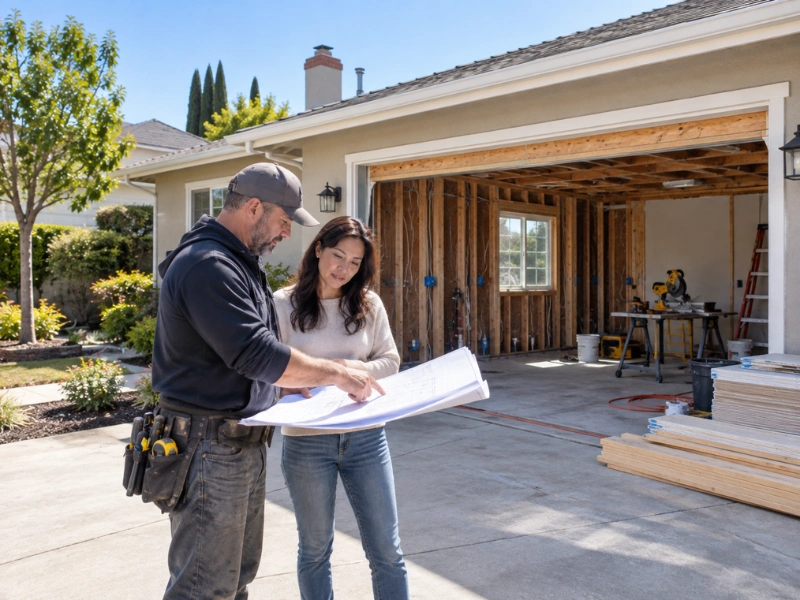

Four key factors will help ensure your hardwood floors will stand the test of time in a Hayward home. Choosing durable wood species, allowing the flooring to properly acclimate, applying the right finish and taking proper care during the first year. Get those right and a floor can serve for decades. Construction Remodeling in Bay Area installs hardwood across Hayward from our office on Jackson Street.
By Ray, Owner & General Contractor · Last updated November 2, 2026
Which wood species hold up best to daily wear?
The harder the species the better, and the easiest way to see this is by looking at the Janka hardness rating. This measures how hard it is to push a steel ball half way into the wood. The higher the value the less dents you will get.
Here’s how common flooring species compare:
Species | Typical Janka rating | Best suited to |
American walnut | About 1,010 | Bedrooms and low-traffic rooms |
Red oak | About 1,290 | Most homes, and easy to match |
White oak | About 1,360 | Living areas, with a tighter grain |
Hard maple | About 1,450 | Busy homes wanting a clean look |
Hickory | About 1,820 | Homes with kids, dogs or heavy traffic |
The grain is just as important. A high grain finish will hide scuffs much better than a smooth, gloss surface. If you’ve got a large dog then having a white oak or hickory with a lot of character will make it look nicer for longer.
How should new hardwood acclimate before installation?
The new hardwood should be left in your home for drying out until it reaches similar moisture levels to the subfloor and room. Gaps and cupping can often occur if the wood is put down to early. The wood can absorb and lose moisture once delivered.
Here’s what good acclimation looks like:
- Normal living conditions first. Heating or air conditioning should run as usual, so the wood adjusts to real conditions.
- Boxes opened or spread out, following the manufacturer’s instructions, so air can reach the boards.
- Moisture readings taken on both the flooring and the subfloor with a meter.
- Wet trades finished first, such as drywall mud, paint and tile, since they add moisture to the air.
The aim here is to get the right match. Some products such as many engineered floors will require little or no acclimation. Always follow the manufacturer’s guidelines.
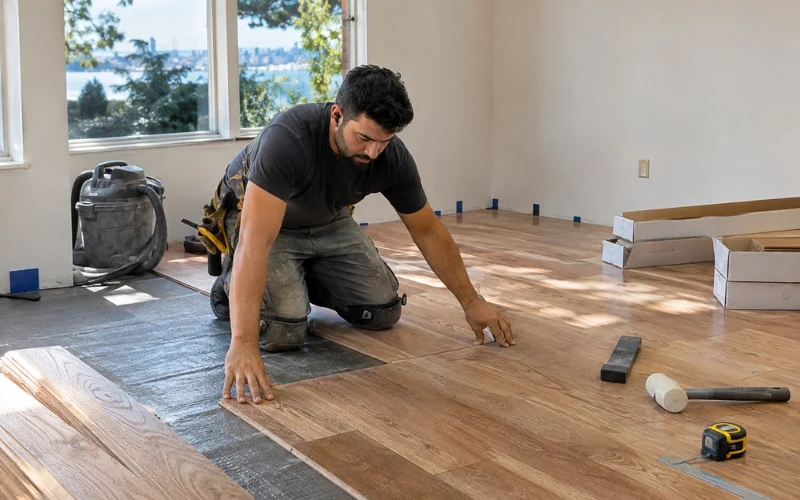
Which finish suits hardwood flooring in a family home?
The best finish depends on how you live on the floor and how you want it to look. Each option trades durability, color and upkeep a little differently.
Here are the main choices:
- Prefinished boards arrive with a factory-cured coating, so there’s no drying time and no finishing smell in the house.
- Water-based polyurethane stays clear, dries fast and has less odor than older oil-based finishes.
- Oil-modified polyurethane gives a warmer, amber tone that deepens over time.
- Hardwax oil soaks into the wood for a natural, low-sheen look, and small scratches can be spot-repaired.
Site-applied finishes release fumes while they cure. The EPA’s guidance on volatile organic compounds and indoor air lists varnishes among the household products that give off VOCs. It recommends extra ventilation and following label directions when they’re used. So for a site-finished floor, plan for open windows and fans during curing.
What do formaldehyde labels on engineered flooring mean?
A formaldehyde label tells you the core of an engineered floor meets federal emission limits. Engineered boards often use plywood or fiberboard under the wood veneer, and those materials are regulated.
The EPA’s consumer FAQ on formaldehyde standards for composite wood lists flooring among the products made with regulated composite wood. Here’s what to look for on the box or product data:
- “TSCA Title VI Compliant” wording, which shows the product meets the federal standard.
- A third-party certifier number, which ties the product to an approved testing body.
- The producer’s name and lot number, so the batch can be traced.
Older stock may say “CARB Phase 2 compliant” instead, since California’s standard came first and the two limits match. If a box carries no label at all, ask the supplier for the product’s compliance sheet before it goes down.
How do you prep a room for hardwood flooring install day?
Prep the room by emptying it, protecting the rest of the house and planning around doors and trim. Good prep keeps the install moving and avoids damage to things nearby.
Here’s a practical checklist:
- Clear the floor, including furniture, rugs and anything stored in closets.
- Plan for baseboards and door trim, which often come off and go back on after installation.
- Check door clearances, since new flooring can be taller than what it replaces.
- Agree where transitions go, such as at tile, carpet or a sliding door track.
- Keep pets and kids clear of the work area and any cutting station.
It also helps to think about appliances. Refrigerators and dishwashers may need moving, and the new floor height can affect how they fit back in. Still weighing solid or engineered hardwood for a Hayward California house? Ask for the finished height of each option, so door and appliance clearances can be planned early.
How do you care for hardwood floors in the first year?
Care in the first year comes down to keeping grit off, keeping water off and giving a new finish time to cure. Most early damage comes from sand and furniture, not from normal walking.
Here’s what makes the biggest difference:
- Felt pads under every chair and table leg, replaced when they wear thin.
- Doormats at each entry, since sand acts like sandpaper underfoot.
- A dry or barely damp mop with a cleaner made for finished wood, never a steam mop.
- Rugs placed gradually on site-finished floors, following the finish maker’s cure time.
- Steady indoor humidity, avoiding big swings from space heaters or open windows on hot, dry days.
Small dents and light scratches happen to every floor. When a floor eventually looks tired all over, homeowners searching hardwood floor refinishing Hayward CA can read the refinishing answer in the FAQs below.
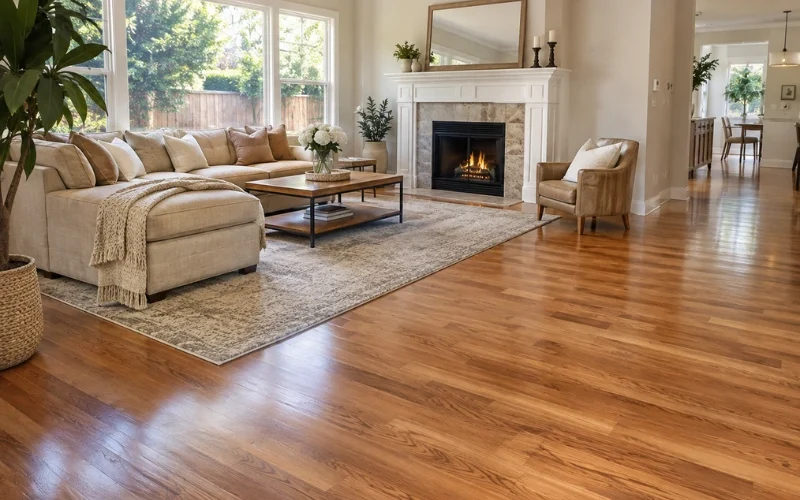
Where do we install hardwood around Hayward?
We install hardwood across Hayward, Castro Valley, San Leandro, Union City and Fremont, from Mt. Eden up to the Hayward Hills.
People often ask, can hardwood be installed over a concrete slab? Some also wonder, can I install hardwood over a concrete slab home in Hayward CA, or what is the difference between solid and engineered hardwood? We answer those in the FAQs below.
Anyone searching for engineered hardwood over concrete slab Hayward CA options can also read our guide to flooring installation on a Fremont slab. If you’re searching for solid vs engineered hardwood Hayward California advice, our Union City hardwood flooring guide covers that too.
For more about working with us locally, see our Hayward remodeling page or browse finished projects in our portfolio.
Frequently asked questions
1. How much does hardwood flooring cost installed in Hayward, CA?
Hardwood flooring installation in the Bay Area typically costs around $9 to $24 per square metre. Homes in Hayward will fall into this bracket. The cost of your installation will depend on the type of flooring you choose (species of wood, solid vs engineered), finish, subfloor repairs and removal of old flooring. Installing stairs, patterns and numerous small rooms will increase the time and cost. Once we have visited your property for free we can give you a fixed price.
2. My house is on a slab: what are my options?
Typically engineered hardwood is best, either adhesive or floating. The slab will need to be tested for moisture and often sealed with a vapour barrier or moisture resistant adhesive. It will also need to be level, so may need filling. Solid hardwood will typically require a new ply subfloor to be added, increasing the height of your floor.
3. Solid or engineered: which is right for this climate?
Both can be used in our mild climate in Hayward, however engineered is often the best option. The multi-layered core means the engineered hardwood will have less movement due to seasonal changes in humidity. This makes it ideal for slabs and rooms near exterior doors. Solid hardwood can be sanded and refinished more throughout its lifespan. If you have a wooden subfloor and intend on living in your home for decades then solid is a great option.
4. Can my existing floors be refinished instead of replaced?
Most solid hardwood can be sanded, often multiple times. As long as there is sufficient wood above the tongue of the flooring. Engineered flooring can often be sanded if it has a thick top layer. If there are deep pet stains, water damage or boards that move when walked on these may need replacing. We can quickly check how much wood is left by sometimes lifting a floor vent.
5. How long is the job, and can I stay in the house?
Most installations can be completed within a few days up to a couple of weeks. Depending on the size of the area, preparation of your subfloor and whether it is site finished. Many families will stay in their homes whilst prefinished flooring is being installed by moving around the house. Site finished flooring will require you to stay off the floors whilst they dry and clear any fumes. We will create a plan showing you how long each room will take.
Visit or Call Us
Construction Remodeling in Bay Area
Address: 111 Jackson St, Hayward, CA 94544
Phone: (510) 990-9243
Email: constructionremodelinginbay@gmail.com
CSLB Lic. #1095283
Licensed, fully insured remodeling contractor since 2015 with a 5-year workmanship warranty, serving Hayward, Castro Valley, San Leandro, Union City, Fremont and the wider Bay Area.